
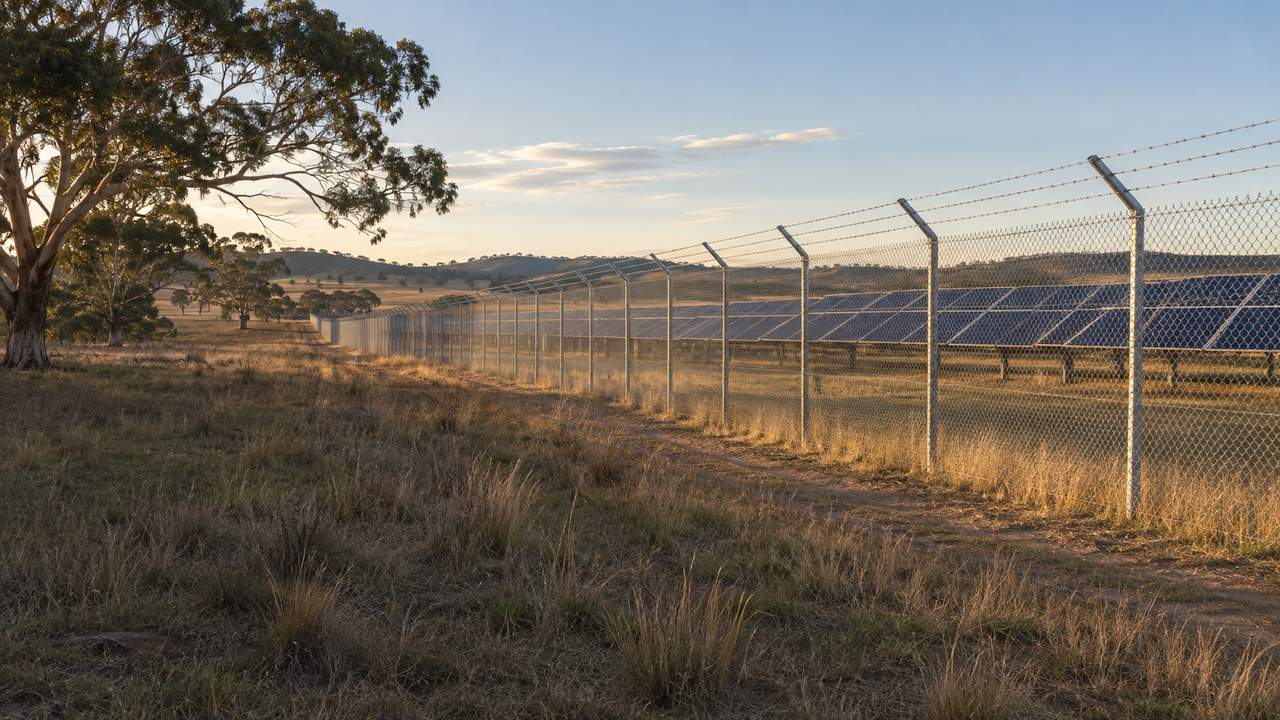
Case study · Industrial & security fencing
Sale of an Industrial & Commercial Security Fencing Contractor in Regional NSW
A founder-owned fencing contractor with about $8M in revenue sold for its full asking price to a bank-backed private buyer. The founder received 80% in cash at completion and a guaranteed return on the balance, with no earn-out.
Transaction managed by Morgan Business Sales · Settled July 2026
Want to see more results? See all case studies
- 100%Of the asking price
- 80%Paid in cash at completion
- 15% p.a.Minimum return on the deferred balance
- 10 weeksFrom listing to first written offer
- NoEarn-out
The business
Business Overview
| Business | NSW industrial & commercial security fencing contractor |
|---|---|
| Services | Supply and installation of industrial, commercial and security fencing for solar and wind farms, transmission switchyards, correctional, defence and education sites, mining, councils and major infrastructure contractors |
| Industry | Construction trade services: industrial and security fencing |
| Location | Regional NSW, with projects across NSW, the ACT, Victoria and Queensland |
| Revenue | Approx. $8M |
| Profit (EBITDA) | $1.5M+ in FY25 (adjusted) |
| Team | The owner, plus supervisors, installers, estimating and admin staff and an operations lead, with subcontractors on larger jobs |
| Years in business | 15+ |
| Owner | The founder and sole owner |
| Type of sale | Business (asset) sale of the goodwill, plant and equipment to the buyer's new company, plus stock at value. The buyer leases the yard and workshop from the vendor |
| Final sale price | Full asking price, plus stock at value |
| Payment | 80% in cash at completion. The other 20% is paid in two fixed instalments over two years, with a guaranteed minimum return |
| Transaction managed by | Morgan Business Sales |
| Advisers | Sean Wolrige (lead broker), supported by Alan Kanuk |
| Settled | 24 July 2026 |
What the owner wanted
Objective
The business was owned by its founder, who was supported through the sale by the family group's long-standing external accountant and adviser.
The sale was about succession: passing the business on while it was performing at its best. FY25 was a record year for both revenue and profit, and there was strong renewable energy and infrastructure work on hand. Just as important, the founder wanted a buyer who would successfully continue the legacy they had built.
In order of priority, a successful outcome meant:
- full value: the asking price, not a discounted offer;
- certainty: most of the money in cash at completion, with no earn-out risk (no part of the price depending on future results);
- a guaranteed return on any part of the price that was paid later;
- a buyer who would continue the business, its staff and its customer relationships, with an ongoing role for key operations staff.
The founder's non-negotiables were the headline price, fixed rather than performance-based deferred payments, and the operating assets transferring free of any debts or claims. They also wanted the option to withdraw if the agreed value couldn't be reached, which a 30-day termination clause in the agency agreement allowed.
A clear plan from day one
Why They Chose Morgan Business Sales
The founder was introduced to Sean Wolrige through their business consultant. Within two days of the first meeting, Sean delivered a structured proposal that set out how the business should be priced and sold.
An appraisal-first approach
The proposal started with a proper appraisal to set the price, then laid out the full sale process: an initial request for information, a Confidential Information Memorandum (CIM), researched buyer targeting and a data room for the buyer's review.
Our own technology: CIM-PRO
The sale was run on CIM-PRO, Morgan Business Sales' proprietary deal management platform.
The sale in brief
Summary
The business had a strong regional presence, a diverse base of blue-chip clients (tier-1 contractors, energy developers, a state transport agency and councils), growing work from the renewable energy build-out, an experienced team and improving margins, with gross margin up from 31% to 34% in FY25.
But it sat inside a family group, its revenue came project by project, and the founder was central to the business. Sean separated out the true earnings of the fencing business, prepared the data buyers and banks would need, and took it to market confidentially in December 2025. The first written offer came about ten weeks later, from a well-prepared private buyer.
The buyer's bank wouldn't fund a 100% purchase, so Sean structured a deal the bank would support without asking the founder to take on earn-out risk: 80% in cash at completion and 20% paid in two fixed instalments with a guaranteed minimum return. The full asking price held through due diligence, and the sale settled on 24 July 2026.
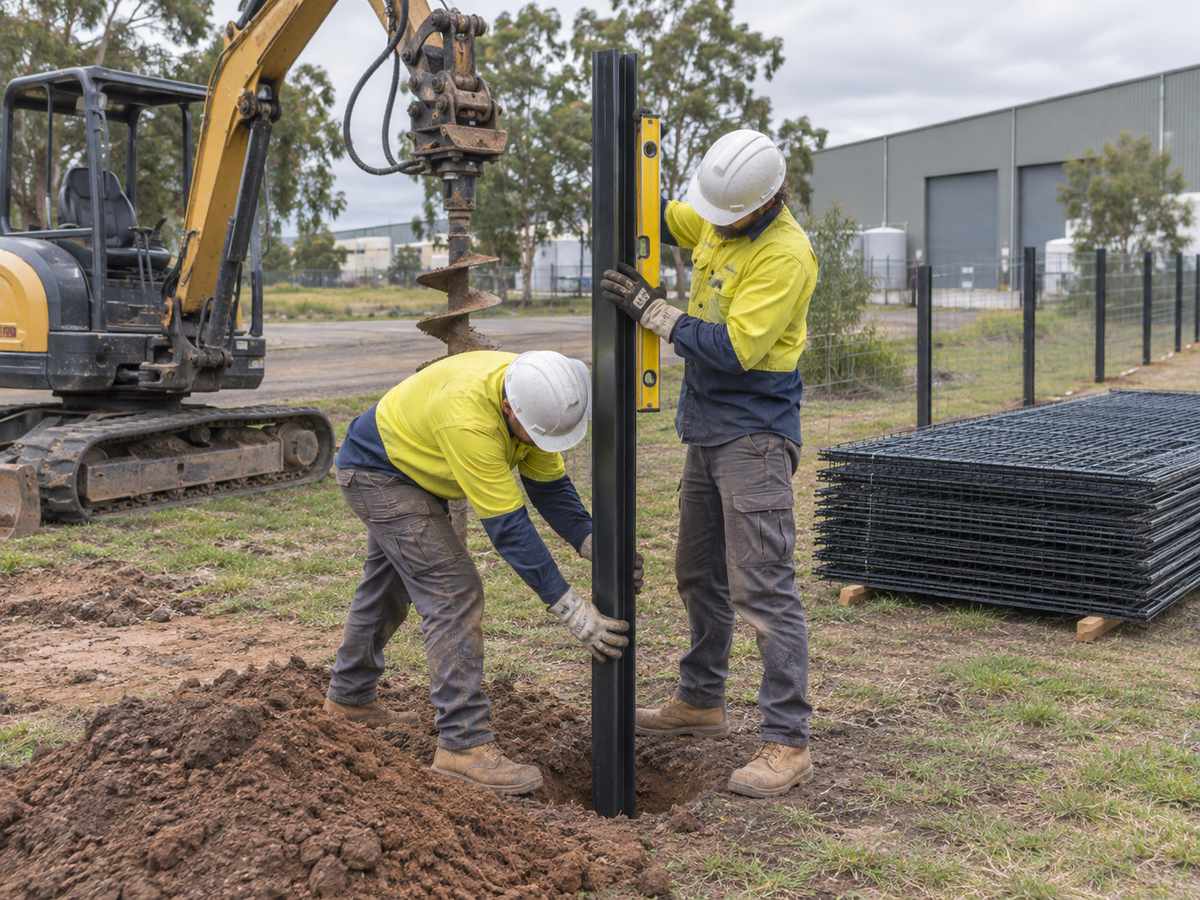
About 11 months from first meeting to settlement
Sale Timeline
Phase 1 · Aug – Dec 2025
Preparation
About 3.5 months from first meeting to listing
Phase 2 · Dec 2025 – Feb 2026
Marketing & offers
First written offer about 10 weeks after listing
Phase 3 · Mar – May 2026
Buyer's review
Due diligence done in about two months
Phase 4 · May – July 2026
Contracts & settlement
Settled 24 July 2026
| Date | What happened |
|---|---|
| 25 August 2025 | First meeting with Sean Wolrige. A structured proposal follows within two days |
| September 2025 | Proposal accepted on 1 September and the agency agreement signed |
| September – November 2025 | Financial data gathered, appraisal completed, and the Confidential Information Memorandum (CIM) and teaser prepared |
| 10 December 2025 | Anonymous listing goes live, alongside direct approaches to industry buyers and investors |
| 19 February 2026 | First written offer: a detailed term sheet from a private buyer |
| 22 February 2026 | The buyer revises the offer to the full asking price |
| 26 February 2026 | Terms agreed |
| March 2026 | Heads of agreement signed. The buyer's due diligence begins |
| May – June 2026 | Contract of sale and deed of loan negotiated |
| Early July 2026 | Contracts exchanged. Staff are told about the sale |
| 24 July 2026 | Sale settled, about 7.5 months after listing |
What had to be managed
Challenges
01
A business inside a family group
The equipment was held in a related trust, the business paid rent and licence fees to related parties, and some staff were shared with other group businesses. Its earnings had to be carefully normalised (adjusted to show what the fencing business really earns on its own), because reported profit was less than half of the adjusted EBITDA.
02
Project-based revenue
Revenue came contract by contract and included large one-off projects. One customer made up about 28% of FY25 revenue. Buyers wanted to see work in progress (WIP), the order book and the quote pipeline to back up the earnings.
03
Reliance on the founder
The founder was central to client relationships and estimating. A transition plan, and an ongoing role for the operations lead, were needed to give a buyer confidence.
04
How buyers would fund it
At this size, the likely buyers were private operators using bank finance. Lenders usually want the seller to keep a financial interest in the business after completion, which put pressure on the founder's wish for certainty.
How the sale was run
Strategy & Approach
Showing the true earnings
Sean valued the business using a capitalised earnings approach, which applies a multiple to its normalised annual profit (EBITDA) for FY25. To get to that figure, he added back the cost of employees who didn't work in the fencing business, rent on properties the business didn't need, and related-party licence and hire fees, and adjusted the owner's salary to a market rate.
A dated action plan
Sean ran an agreed, dated action plan with the founder's team. It covered a fixed asset list, quarterly results, an operational questionnaire and a list of reasons for buyers to buy.
Everything ready before an offer
- a normalised EBITDA bridge (a step-by-step reconciliation from reported profit to adjusted EBITDA), with clear notes for every add-back, ready for the buyer's financial review;
- a full financial due diligence request list, issued early;
- an online data room the internal team started filling before any offer arrived, covering financials, contracts, HR, legal, insurance and licences;
- an ongoing role agreed for the operations lead, to support continuity.
Because of this, the buyer's due diligence, including an independent financial review, was completed within about two months of agreeing terms.
A confidential buyer process
Confidentiality was protected at every step:
Step 01
Anonymous advertising
The listing didn't name the business or its location.
Step 02
Agreement first
Buyers signed a confidentiality agreement before the business name or the CIM was released.
Step 03
Controlled contact
Competitors were approached under strict confidentiality, and all buyer contact with the business and staff went through Sean.
Step 04
Staff told at exchange
Staff were told about the sale only after contracts were exchanged.
Reaching the right buyers
The business was marketed three ways:
- an anonymous listing on the Morgan Business Sales website and business-for-sale portals, plus the Morgan Business Sales buyer database;
- direct approaches to a researched list of the 30 or so largest security fencing companies in Australia, plus parties the founder nominated and private investors;
- a short teaser, then a confidentiality agreement, then the CIM.
The targets included larger fencing and security groups (national commercial fencing contractors and security product makers), private equity and family offices, and experienced operators looking to buy a business.
| Direct industry and investor approaches | 30+ |
|---|---|
| Enquiries from the listing and database | 80 |
| Confidential Information Memoranda released | 60 |
| Buyer discussions and site meetings | Several |
| Written offers | 1 term sheet, 2 revisions |
| Rounds of negotiation | 3 |
| Listing to first written offer | About 10 weeks |
The deal story
Holding Firm on the Full Asking Price
Industry buyers were cautious. The strongest interest came from a well-prepared private buyer, but his bank wouldn't fund a 100% buyout and wanted the founder to stay financially involved. Rather than drop the price, Sean changed tack to a structured, bank-friendly deal: cash at completion, plus a stake for the founder that the buyer pays out over time.
| Date | Offer |
|---|---|
| 19 February · Term sheet | A detailed offer from the private buyer, with the founder keeping a 15% share of the business. |
| 22 February · Revision | The full asking price plus stock on consignment, with the founder keeping 20%. But the final 10% would have been worked out as two times the business's trailing (most recent 12 months') EBITDA, with a cap. |
| 26 February · Agreed terms | The full asking price plus stock: 80% in cash at completion and 20% deferred, paid in two fixed instalments at months 12 and 24, with a guaranteed minimum return of 15% a year and incentives for the buyer to pay out early. No earn-out. |
What the buyer proposed
The last part of the price would have depended on how the business performed under the new owner. The founder would have carried that risk without any control over the result.
What Sean negotiated Agreed
Sean declined to link any of the price to future earnings. Instead, the deferred 20% is paid in fixed instalments with a guaranteed minimum return, so the founder carries no earn-out risk.
From agreed terms to settlement
Negotiating and Finalising the Sale
The final deal
The deal is a vendor rollover with a staged buyout: the founder keeps a 20% stake after completion, and the buyer pays it out in fixed instalments. It gave the bank the seller involvement it wanted without exposing the founder to an earn-out. It was documented through a deed of loan.
Cash at completion
Paid at settlement, funded by the buyer's bank.
Fixed instalments
The remaining 20% is paid in two fixed payments at months 12 and 24.
Guaranteed minimum return
Dividends from the founder's stake count towards it, and interest makes up any shortfall.
Buyout incentive
The buyer is rewarded for paying the founder out ahead of schedule.
01
Funding certainty
Before the heads of agreement (the document setting out the agreed terms before full contracts) was finalised, the buyer provided a summary from his finance broker confirming the bank's support.
02
Getting the completion details right
Late in the process, work in progress (WIP), stock, retentions (amounts clients hold back until a job is finished) and the premises all needed specific contract terms to protect both sides. These included WIP and conditions-precedent clauses (conditions that must be met before completion), stock at value, retentions, and a new market-rent lease of the yard with an office fit-out funded by the founder.
03
Separating the business from the group
Moving the fencing staff and assets out of the wider family group was documented clause by clause. The WIP mechanism was drafted by the founder's accountant and agreed with the buyer's accountant.
04
Keeping the advisers moving
Contract drafting and the bank's conditions pushed completion from the planned April date to July. Sean ran weekly meetings with action plans and set a firm exchange date to keep everyone moving. No deal fell over, and the buyer stayed committed throughout.
Who bought the business
The Buyer
The buyer is an experienced private buyer who bought through a new company, with bank finance arranged through a commercial finance broker. He gained:
- an established, profitable regional platform;
- a strong order book in renewables and infrastructure;
- blue-chip customers and a skilled team;
- a plant and equipment base ready to grow.
Why the founder chose this buyer
- Full price. He met the full asking price.
- Preparation. His approach was thorough and well documented.
- Funding. His bank finance was lined up.
- Legacy. He committed to continuing the founder's legacy and team.
The outcome
Final Result
100%
Of the asking price, plus stock at value
80%
Paid in cash at completion
15% p.a.
Minimum return on the deferred balance
11 months
From first meeting to settlement
- Deal structure
- Asset sale. 80% cash at completion and 20% in two fixed instalments over two years. No earn-out
- Offers
- One detailed term sheet and two revisions, over three rounds of negotiation
- Staff
- The fencing staff transferred to the buyer
- Handover
- The founder stays involved through the two-year staged buyout, and the operations lead continues in an ongoing role
- Premises
- The buyer leases the yard and workshop from the founder at market rent
- Timing
- First written offer about 10 weeks after listing. Settled 24 July 2026
The founder's price expectation was met in full, and performance risk was replaced with fixed payments and a guaranteed return.
The lead broker
From the Broker
"The owner wanted full value and certainty. The buyer's lender needed the owner to stay invested. We bridged that with a staged buyout that has fixed payments and a guaranteed return, so the deal closed at the full asking price without an earn-out."
Sean WolrigeLead Broker, Morgan Business Sales

Lead Broker, Morgan Business Sales
Talk to Sean about what your business could be worth and how a sale could work for you.
What owners can learn
Key Insights
Industry Trends & Buyer Demand
Renewable energy, transmission and infrastructure projects are driving demand for specialist security fencing contractors. Experienced regional operators with tier-1 credentials appeal to private buyers and larger groups alike.
What These Businesses Sell For
Owner-operated contracting businesses with $1M–$2M EBITDA typically sell for around three times EBITDA. Buyers using bank finance will often need the seller to keep a stake or defer part of the price.
| Business | EBITDA multiple |
|---|---|
| $1M–$2M EBITDA | About 3x |
Where a business sits depends on how its earnings are presented, how much of its revenue comes from a few clients, how much it relies on the owner, and how the buyer is funding the purchase.
Strategic Takeaways for Owners
Sean's advice for owners 12 to 24 months from a sale:
01
Separate the business from the family group.
Untangle entities, assets and related-party charges before going to market.
02
Keep your project reports current.
Buyers and banks rely on up-to-date WIP, order book and quote pipeline reports.
03
Formalise your leases.
Put leases in place on any premises the business needs.
04
Be ready to keep a stake or defer part of the price.
Then negotiate fixed terms, not earn-outs.
05
Prepare for due diligence early.
A data room started before an offer arrives keeps the buyer's review short and protects the price.
06
Sell from a strong year.
Going to market after a record year, with work on hand, gives buyers confidence in the earnings.
Market Takeaway: Well-structured deferred terms can win the full price from a bank-funded buyer without the seller taking on performance risk.
Common questions
Frequently Asked Questions
How much is a fencing contracting business worth?
Owner-operated contracting businesses with $1M–$2M EBITDA typically sell for around three times EBITDA. Where a business sits depends on how clearly its true earnings are shown, how much it relies on a few clients or on the owner, and how the buyer is funding the purchase.
What is normalised EBITDA, and what are add-backs?
Normalised EBITDA is the business's profit adjusted to show what it would earn under a new owner. Add-backs are costs that won't continue after the sale, such as staff who work for other related businesses, or rent and fees paid to related parties. In this sale, reported profit was less than half of the adjusted EBITDA.
What's the difference between an asset sale and a share sale?
In an asset sale, the buyer purchases the business and its assets, such as goodwill, plant and equipment, but not the company that owns them. In a share sale, the buyer purchases the company itself. This business was sold as an asset sale to the buyer's new company.
Why would a bank want the seller to keep a stake?
Lenders are more comfortable when the seller stays financially involved after the sale, because it shows confidence in the business and supports a smooth handover. In this sale, the buyer's bank wouldn't fund a 100% buyout, so the founder kept 20%, which the buyer pays out over two years.
What's the difference between an earn-out and fixed deferred payments?
An earn-out is part of the price paid later only if the business hits agreed targets, so the seller carries the risk. Fixed deferred payments are set amounts paid on set dates. In this sale, the deferred 20% was paid in two fixed instalments with a guaranteed minimum return of 15% a year.
What is a vendor rollover?
A vendor rollover is where the seller keeps or reinvests part of their value in the business after the sale, rather than receiving it all at completion. In this sale, the founder's 20% is bought out in two fixed payments, with a reward for the buyer if they pay it out early.
How are work in progress and retentions handled when a contracting business sells?
They need specific terms in the contract so neither side loses out at completion. In this sale, the WIP mechanism was drafted by the founder's accountant and agreed with the buyer's accountant, and retentions and stock were dealt with in the contract of sale.
Can I sell my business without my staff finding out?
Yes, with the right process. In this sale the business was advertised anonymously, buyers signed a confidentiality agreement before receiving any details, all contact went through the broker, and staff were told only after contracts were exchanged.
More results