
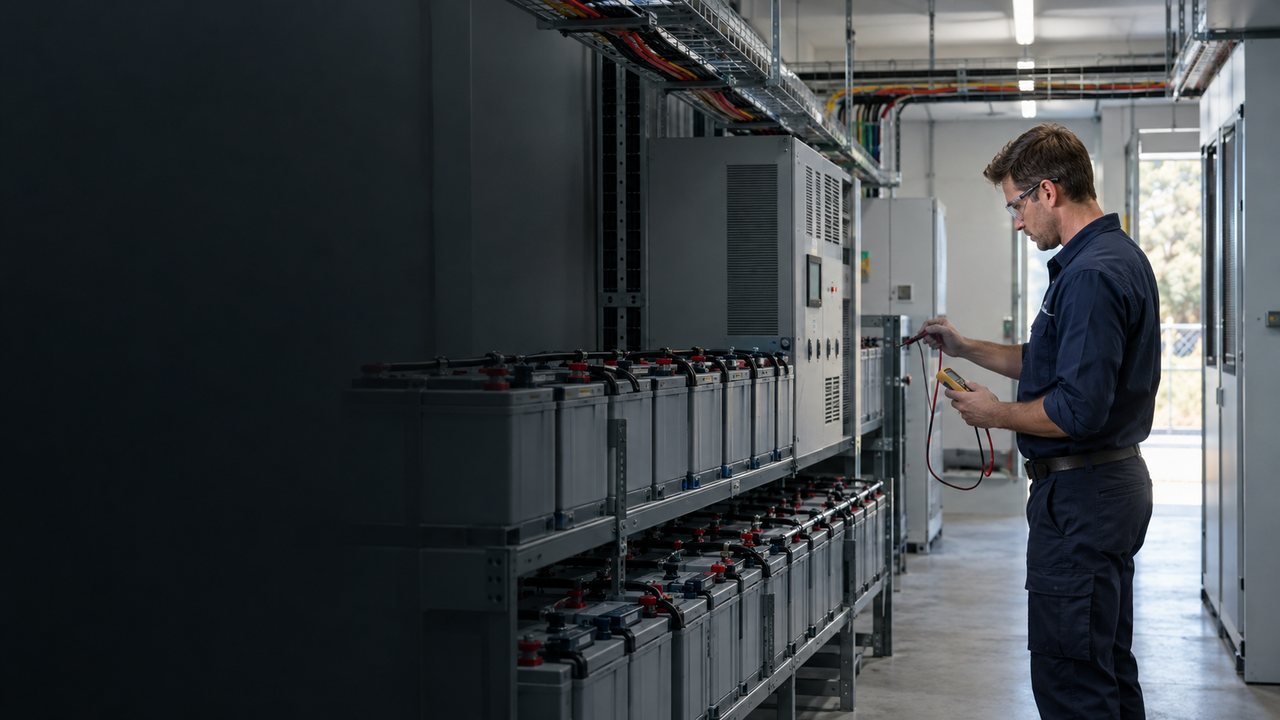
Case study · Accredited electrical contracting
Sale of an Accredited Electrical Contractor in Sydney
After a patient year of preparation, a Sydney-based electrical contractor with a national footprint sold for around $1.4M, almost 50% above its starting valuation. The deal held together through two attempted price cuts.
Transaction managed by Morgan Business Sales · Settled October 2026
Want to see more results? See all case studies
- Around $1.4MSale value
- Almost 50%Above the starting valuation
- About 3xAverage annual profit (EBITDA)
- 54 daysFrom launch to first offer
- 100%Staff kept on
The business
Business Overview
| Business | Sydney-based accredited electrical contractor with a national footprint |
|---|---|
| Industry | Electrical contracting: telecommunications, infrastructure, battery and DC power, and commercial electrical work |
| Location | Sydney, with projects in NSW, Queensland, Western Australia and Victoria |
| Clients | Tier-1 telecommunications and infrastructure clients, many under long-term supply agreements |
| Revenue | $6M+ |
| Staff | 10+ |
| Years in business | 30+ |
| Type of sale | 100% share sale (the buyer bought the company itself) |
| Asking price | $1.495M, including working capital |
| Final sale price | Around $1.4M (about 3 times average annual profit over three years) |
| Transaction managed by | Morgan Business Sales |
| Lead broker | Sean Wolrige |
| Settled | October 2026 |
What the directors wanted
Objective
The company had three shareholders: the managing director and a second director, who both worked in the business, and a retired founding shareholder. Both working directors were ready to step back and retire.
In order of priority, a successful outcome meant:
- as much cash as possible paid upfront;
- a buyer with the financial strength to pay the later instalments and keep the business running smoothly;
- a limited handover period, ideally 12 months;
- continuity for staff and for key client contracts.
There was no hard deadline, but the directors were firm on three points:
- at least half the price paid upfront;
- no bonus payment based on profit if they sold 100% of the company;
- their personal guarantees and the bank's security released at settlement.
Honest advice first
Why They Chose Morgan Business Sales
The directors first spoke to Sean Wolrige in mid-2024. Instead of rushing them to market, Sean gave them some candid advice: wait for a second profitable year and get the business ready first. He suggested cleaner financials, less reliance on the directors, a review of the change-of-control clauses in client contracts (clauses that let a client review or end a contract if the business changes hands), a plan to keep key staff and a stronger pipeline of work.
That honesty built trust. When the 2025 financial year was shaping up strongly, the directors came back to Sean, and Morgan Business Sales was appointed in June 2025.
Our own technology: CIM-PRO
The business appraisal and the Confidential Information Memorandum (CIM) were both built in CIM-PRO, Morgan Business Sales' proprietary deal management platform. CIM-PRO builds a web-based, media-rich CIM that shows the business at its best, matches it with buyers across Australia and keeps every step of the sale confidential. Instead of emailing documents that can be forwarded or copied, each approved buyer gets their own online access, which can be switched off at any time. With direct competitors among the possible buyers, that level of control mattered.
The sale in brief
Summary
A specialist, accredited contractor with tier-1 clients, long-term supply agreements and national reach, the business made a profit of more than $900k in the 2025 financial year on revenue of around $6M.
It drew 15 confidentiality agreements in its first two weeks on the market and a first offer 54 days after launch. Despite a buyer funding wobble and a late attempt to cut the upfront payment, it sold for around $1.4M, almost 50% above its starting valuation of about $950k.

From first conversation to settlement
Sale Timeline
Phase 1 · Mid-2024 – June 2025
Preparation
About 12 months
Phase 2 · Sept – Nov 2025
Marketing
54 days to first offer
Phase 3 · Nov 2025 – Aug 2026
Negotiation & review
About 9 months
Phase 4 · Aug – Oct 2026
Settlement
About 11 weeks
| Date | What happened |
|---|---|
| Mid-2024 | The directors first approach Morgan Business Sales. Sean advises them to wait for a second profitable year and prepare the business. |
| May 2025 | The directors return, with the 2025 financial year looking strong |
| June 2025 | The directors appoint Morgan Business Sales |
| Mid-September 2025 | The business goes to market, about 12 weeks after appointment |
| Late September 2025 | 15 confidentiality agreements signed and 8 Confidential Information Memoranda released within two weeks of launch |
| 10 November 2025 | First offer received: $1.4M |
| Late Nov 2025 – Jan 2026 | The buyer's funding wavers and Sean keeps the campaign running. The buyer returns with bank support and the original terms (see Holding Firm on the Offer below). |
| 29 January 2026 | Letter of intent accepted, then signed in early February |
| February – May 2026 | The buyer reviews the business (due diligence) |
| 3 August 2026 | Sale contracts exchanged |
| 17 October 2026 | Sale settled |
What had to be managed
Challenges
01
Losses in earlier years
The business made losses in the 2022 and 2023 financial years, so buyers focused on the two most recent, profitable years. That supported a bonus payment linked to future results, but it put pressure on the price buyers were willing to pay upfront.
02
Reliance on the directors
Both directors were central to client relationships and to pricing new work. Buyers wanted them to commit to staying for two years, while the directors would have preferred 12 months.
03
Client contracts that needed consent
The long-term supply agreements with tier-1 telecommunications clients included change-of-control conditions and long notice periods. Some clients had to agree before the sale could go ahead.
04
A buyer relying on bank funding
The preferred buyer was a smaller, ambitious business that needed bank debt to fund the purchase. Its funding changed several times, and each time the amount it could pay upfront changed with it.
05
Issues that came up along the way
Staff leave entitlements turned out to be larger than expected and took time to agree. In July 2026, just before contracts, two senior tradesmen left of their own accord to start new roles in data-centre work, and new work was slower to come in, so the buyer tried to cut the upfront payment. The directors' bank also wouldn't release its security until the buyer put new security in place.
How the sale was run
Strategy & Approach
A valuation buyers could trust
Sean valued the business on the profit it could be expected to keep making, allowing for its up-and-down history. The value was based on a share sale and included the working capital the business needed to operate (the cash and money owed to it that cover its costs while waiting to be paid).
Keeping other buyers in play
When the preferred buyer's funding wavered in late November, Sean didn't take the business off the market. He kept the campaign running, with more buyer meetings through December. That competition helped bring the buyer back in January with bank-backed terms.
Everything ready before launch
Before any buyer was approached, the following were ready:
- a review of the change-of-control clauses in the directors' client contracts;
- a researched buyer list, combined with the directors' own suggestions of larger electrical, air-conditioning and infrastructure groups;
- a short, anonymous summary of the business;
- a thorough Confidential Information Memorandum (CIM), built in CIM-PRO;
- a full data room for the buyer's review of the business.
A tightly controlled buyer process
Confidentiality was protected at every step:
Step 01
An anonymous listing
The business was advertised without its name.
Step 02
Checks and confidentiality agreements first
Every buyer was checked and signed a confidentiality agreement before receiving the CIM.
Step 03
Competitors checked
The directors signed off on any direct competitor before they were approached.
Step 04
Funding confirmed privately
The buyer asked that its bank terms not be shared, so Sean checked the funding himself and confirmed it to the directors.
Going straight to the right buyers
Alongside the anonymous listing, Sean approached buyers directly from the researched list.
In its first two weeks on the market, the business drew 15 confidentiality agreements, and 8 Confidential Information Memoranda were released.
Buyers approached directly included
- larger electrical and infrastructure contractors wanting telecommunications and DC power capability;
- ASX-listed services groups;
- regional electrical groups buying businesses to add to their own;
- private investor groups;
- owner-operators wanting to grow quickly.
The deal story
Holding Firm on the Offer
The first offer, in November 2025, was $1.4M: $1M upfront plus a $400k bonus payment linked to future results (an earn-out). The directors were very happy with it. Then the buyer's funding wavered, and the upfront cash on the table moved with every proposal.
| When | What happened |
|---|---|
| November 2025 | First offer of $1.4M: $1M upfront plus a $400k earn-out |
| Late November 2025 | The buyer proposed just $300k upfront, with $800k in vendor finance over three years and a $300k earn-out. Sean rejected it. |
| January 2026 | Two revised offers raised the upfront cash to $500k and then $700k. Sean countered both. |
| 23 January 2026 | With bank support secured, the buyer came back with $1M upfront, and the directors signed a letter of intent |
| July 2026 | After two senior tradesmen left, the buyer tried to cut the upfront payment to $700k. Sean met them partway at $800k, with a tiered earn-out that keeps the total at $1.4M on target. |
What is vendor finance? Vendor finance means the sellers lend the buyer part of the price and are paid back over time. Sean advised against it here.
"They would have been paid with the money they would otherwise have earnt themselves."
Sean Wolrigeon why he rejected vendor finance
From letter of intent to settlement
Negotiating and Finalising the Sale
The final deal
The buyer bought 100% of the shares for around $1.4M. The company was handed over without its surplus cash or debt, and with an agreed amount of working capital left in the business. The deal included:
Cash at settlement
Funded by the buyer's bank, less agreed adjustments for staff entitlements.
A tiered bonus payment (earn-out)
Measured only on invoiced revenue, with no profit test. If revenue is above target, the directors earn more, up to a total price of around $1.5M; if it's below, they earn less.
A dividend
Surplus cash was paid out to the shareholders as a dividend before settlement, which gave them a better tax outcome.
01
A bonus payment based on revenue, not profit
The buyer wanted the earn-out to be based on a higher revenue target plus a minimum profit margin. Once the buyer took control, the directors would have no say over costs, so a profit test would have put their payment at risk. Sean secured a lower revenue target and no profit test.
02
Agreeing staff entitlements and working capital
Sean worked directly between the two sides' accountants to agree how staff leave and working capital would be handled. Each type of leave was valued at an agreed percentage and taken off the price, and the buyer agreed not to deduct the extra costs that come with it.
03
Limiting client consents
Change-of-control consent was only sought from the clients whose contracts actually required it, which kept the number of approvals needed to a minimum.
04
A thorough review
The buyer's review of the business (due diligence) ran from February to May 2026 through a shared data room. It covered the financials, operations and legal matters, including monthly profit and loss statements, balance sheets, licences, certifications and policies.
05
Getting to settlement
After contracts were exchanged, Sean secured a new two-year lease, with an option for two more, and worked with both sides to meet the remaining conditions: consent from key telecommunications clients, the release of the bank's security and a new bank guarantee. The directors' personal guarantees and the bank's security were released at settlement.
06
A planned handover
Sean coached the directors that offering to stay for up to two years, stepping down over time, would reassure buyers more than insisting on 12 months. They continue on salary, working up to four days a week, and all staff were kept on by the buyer.
No deals fell over, although this one came close twice: during the buyer's funding wobble in November and the price re-cut in July.
Who bought the business
The Buyer
The buyer is an ambitious, growing Sydney electrical contractor. The purchase let it step up in scale overnight, gaining:
- accredited status;
- long-term supply agreements with tier-1 telecommunications and infrastructure clients;
- the ability to deliver projects nationally;
- an experienced team.
Building all of this from scratch would have taken years.
Why the directors chose this buyer
For the directors, the buyer was a natural fit: it has the ambition to grow the business, values their experience and gives them a gradual path to retirement. It also offered the highest total price and stayed committed through a long process.
The outcome
Final Result
Around $1.4M
Sale value
Almost 50%
Above the starting valuation of about $950k
About 3x
The business's average annual profit (EBITDA) over three years
54 days
From launch to first offer
- Deal structure
- $800k cash at settlement, plus a 12-month earn-out based only on revenue, with the total price able to reach around $1.5M
- Offers
- Two written offers
- Staff
- 100% staff kept on by the buyer
- Handover
- The directors stay on for up to two years, stepping down over time
In the client's words
Client Testimonial
"It was the best advice we could have taken."
"When we first approached Sean in 2024, he told us to wait another year and get the business ready. It was the best advice we could have taken. When the buyer's funding wobbled and the price was challenged late in the deal, Sean held firm on upfront cash and a revenue-only earn-out, and kept other buyers in play until we had the right deal. We sold for well above our original valuation, to a buyer who is the right fit for our team and clients, and we'd recommend Sean to any owner thinking about selling."
The DirectorsSydney-based accredited electrical contractor (national footprint)
The lead broker
From the Broker

Lead Broker, Morgan Business Sales
"The best advice I gave the vendors was to wait. Booking another profitable year and staying firm on upfront cash and a revenue-only earn-out turned a business valued under $1M into a $1.4M sale to a buyer who is the perfect fit."
What owners can learn
Key Insights
Industry Trends & Buyer Demand
There is strong demand for accredited electrical businesses that work in telecommunications, battery and DC power, and data centres. The same demand is pulling skilled tradespeople away from smaller contractors, which makes keeping staff a key risk to a business's value.
What These Businesses Sell For
Owner-run electrical contractors of this size typically sell for around 2 to 3 times their annual profit (EBITDA). This business sold for about 3 times. Earn-outs are common where profit has gone up and down.
| Business | EBITDA multiple |
|---|---|
| Typical range | 2 – 3x |
| This sale | About 3x |
Where a business sits in that range depends on:
- how much of its revenue is contracted with tier-1 clients;
- how stable its workforce is;
- how lumpy its project work is;
- how much it relies on the owners.
Strategic Takeaways for Owners
Sean's advice for owners planning to sell in the next one to two years:
01
Sell after two or more profitable years in a row.
Buyers price the business on the trend.
02
Check change-of-control clauses and bank guarantees early.
They decide how quickly you can settle.
03
Lock in your key tradespeople through the sale.
Use retention payments or other incentives.
04
Base any earn-out on revenue, not profit.
Once the buyer takes control, you no longer decide what the business spends.
Market Takeaway: Patience and preparation pay. The right buyer will be flexible on how a deal is structured, as long as the sellers hold firm on upfront cash and fair earn-out terms.
Common questions
Frequently Asked Questions
How much is an electrical contracting business worth?
Owner-run electrical contractors of this size typically sell for around 2 to 3 times their annual profit (EBITDA). Contracted revenue from tier-1 clients and a stable workforce push the value up, while lumpy project work and reliance on the owners bring it down. This business sold for about 3 times its average annual profit over three years.
Should I wait to sell if my business has had a bad year?
Often, yes. Buyers price a business on its recent trend. In this sale, the directors waited a year so a second profitable year was on the books, and the business sold for almost 50% more than its starting valuation.
How long does it take to sell an electrical contracting business?
It depends on the business, the buyer and the contracts involved. In this sale, the first offer came 54 days after launch, and settlement took a further 11 months because of the buyer's funding, the buyer's review of the business and client consents.
What is an earn-out?
An earn-out is part of the sale price that is paid later, once the business reaches agreed targets. In this sale, it was paid over 12 months and measured only on invoiced revenue, not profit.
Why base an earn-out on revenue rather than profit?
Once the buyer takes control, the sellers no longer decide what the business spends. A profit-based earn-out can be reduced by costs they can't control, while a revenue-based one is simpler to measure and fairer to the sellers.
What is vendor finance?
Vendor finance means the sellers lend the buyer part of the price, to be paid back over time. It puts the sellers' money at risk, so in this sale Sean advised against it and held out for more cash upfront.
What is a change-of-control clause?
It's a condition in a contract that lets the client review, approve or end the contract if the business changes hands. Checking these clauses early helps avoid delays at settlement.
Can I sell my business without competitors finding out?
Yes, with the right process. In this sale, the business was listed anonymously, every buyer was checked and signed a confidentiality agreement first, and the directors approved any competitor before they were approached.