
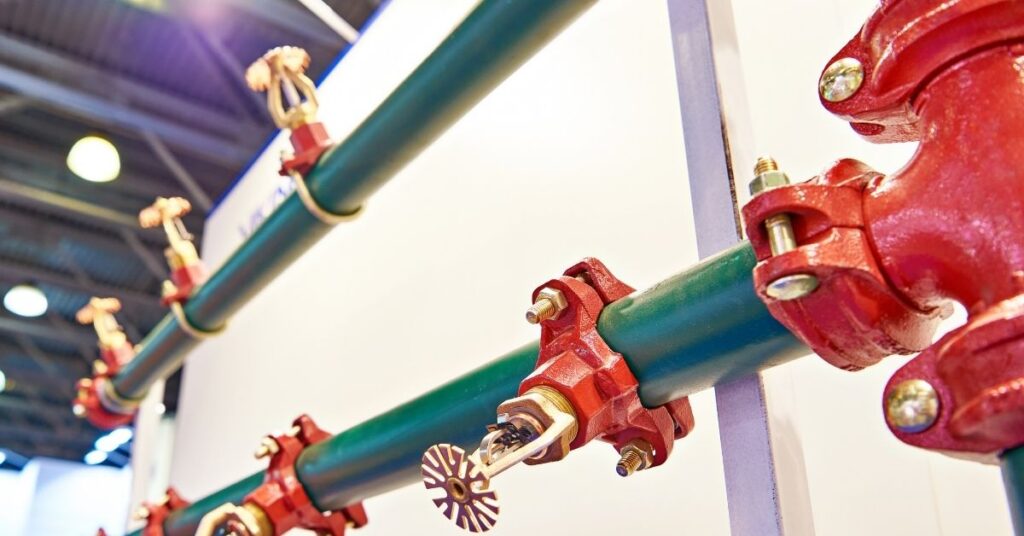
2026 Australian Fire Protection Equipment Wholesaling Industry Report
By Morgan Business Sales | March 2026 | Australian M&A Advisory
The Australian fire protection equipment wholesaling sector represents a compelling, regulation-driven market with strong underlying growth fundamentals. The broader Australian fire safety equipment market is valued at approximately AUD 1.45 billion and is forecast to nearly double to AUD 2.97 billion by 2033, reflecting a compound annual growth rate (CAGR) of 7.42%. Demand is inherently non-discretionary: building owners, facility managers, and developers must install and maintain compliant fire safety systems — creating a resilient revenue base less susceptible to economic cycles than many other wholesale sectors.
Forecast AUD 2.97B by 2033
Structural compliance-driven growth
Non-discretionary industry-wide spend
Fragmented — significant roll-up opportunity
Executive Summary
The fire protection equipment wholesaling sector is classified under ANZSIC Code 3499 (Other Machinery and Equipment Wholesaling n.e.c.) and sits at the intersection of two powerful structural forces: non-discretionary regulatory compliance and a multi-decade construction growth cycle. The broader safety equipment and supplies distribution sector encompasses 841 businesses generating AUD 2.2 billion in industry revenue in 2025–26. Despite a modest five-year annualised decline of 0.4%, the sector is expected to grow 0.5% in 2025–26, underpinned by mandatory compliance with Australian Standard AS 2118, National Construction Code (NCC) requirements, and rising construction activity.
Emerging growth drivers include IoT-enabled smart sprinkler systems, increasing retrofit demand from ageing building stock, and post-bushfire heightened awareness of fire risk. The sector is attracting increasing M&A attention from both strategic and financial acquirers, with recent transactions including BGIS's acquisition of AESM (February 2024) and Siemens' acquisition of Danfoss Fire Safety (October 2024). Fire protection and life safety businesses trade at EBITDA multiples of 3x–10x depending on scale and recurring revenue characteristics.
The sector offers five particularly attractive attributes for acquirers:
- Compliance-driven recurring demand: mandatory AS 2118 and NCC obligations mean fire protection expenditure cannot be deferred — creating a stable, predictable revenue base across economic cycles.
- Essential services positioning: fire protection is a life safety requirement, not a discretionary purchase, placing this sector among the most defensive in the broader wholesale and distribution landscape.
- Strong B2B trade loyalty: sprinkler fitters and fire protection contractors rely on trusted wholesale partners for reliable supply, technical support, and compliance assurance — creating significant switching costs and long-term customer relationships.
- Fragmented market with consolidation runway: no single player dominates the wholesale channel; the 841-business sector is highly fragmented at the SME level, presenting significant roll-up opportunity for well-capitalised acquirers.
- Technology growth optionality: IoT-enabled smart sprinkler systems, AI-powered diagnostics, and integration with building management systems are creating new value-added revenue streams for wholesalers who invest in technical capability.
Industry Overview
ANZSIC Code & Classification
The fire protection equipment wholesaling sector is classified under ANZSIC Code 3499: Other Machinery and Equipment Wholesaling n.e.c. (Australian Bureau of Statistics, ANZSIC 2006 Revision 2.0). The primary activity encompasses fire protection equipment wholesaling, including portable fire extinguisher wholesaling, sprinkler components, valves, pipes, fittings, hydrants, and associated fire safety products. Businesses in this classification act as critical intermediaries between international and domestic manufacturers and the end installer market of sprinkler fitters, fire protection contractors, and building services companies.
Sector Scale & Structure
The overall fire safety equipment market in Australia is valued at approximately AUD 1.45 billion (USD 939 million) in 2024, with the fire sprinkler subsector separately valued at AUD 447 million (USD 289 million) in 2025. The broader safety equipment and supplies distribution sector — which encompasses fire protection alongside other safety equipment categories — comprises 841 businesses generating AUD 2.2 billion in industry revenue in 2025–26.
The sector includes three primary operator types: specialist fire protection wholesalers (focused exclusively on fire safety equipment), general safety equipment distributors (carrying fire protection as part of a broader safety product range), and manufacturer-direct operations (where international manufacturers operate Australian distribution subsidiaries). No single player dominates the wholesale channel, although international groups hold significant market positions through their Australian operations.
| Metric | Value | Source |
|---|---|---|
| Fire safety equipment market (Australia, 2024) | USD 939M (~AUD 1.45B) | Spherical Insights, 2024 |
| Fire safety equipment market forecast (2033) | USD 1.92B (~AUD 2.97B) | Spherical Insights; CAGR 7.42% |
| Fire sprinkler subsector (2025) | USD 289M (~AUD 447M) | IMARC Group, 2026 |
| Fire sprinkler subsector forecast (2034) | USD 461M (~AUD 713M) | IMARC Group; CAGR 5.16% |
| Safety equipment distributors (businesses, 2025–26) | 841 businesses | IBISWorld, 2025–26 |
| Industry revenue (safety equipment distribution) | AUD 2.2 billion | IBISWorld, 2025–26 |
| 5-year annualised revenue change | -0.4% | IBISWorld |
| Projected 2025–26 growth | +0.5% | IBISWorld |
| Annual compliance investment (industry-wide) | AUD 1.6 billion | Ken Research |
| Smart fire detection systems (projected market) | AUD 350 million | Ken Research |
| EBITDA multiple range (fire protection & life safety) | 3x – 10x EBITDA | Breakwater M&A, 2026 |
| Australian private wholesalers (SME, sub-$5M EBITDA) | 3x – 5x EBITDA | Market consensus |
| Primary regulatory frameworks | AS 2118, AS 1851, NCC 2025 | Standards Australia / ABCB |
Market Drivers & Growth Factors
1. Regulatory Compliance — NCC & AS 2118
The foundational demand driver for fire protection equipment in Australia is mandatory regulatory compliance. The National Construction Code (NCC) mandates fire sprinkler systems across Classes 2, 3, 5, 6, 7, 8 and 9 buildings above specified heights — covering the vast majority of multi-residential, commercial, industrial, healthcare, and mixed-use buildings in Australia. AS 2118 governs the design, installation and commissioning of automatic fire sprinkler systems, while AS 1851 governs ongoing maintenance requirements. Together, these standards create a non-negotiable ongoing demand for fire protection equipment from wholesalers supplying the installer market.
Annual compliance investment across the industry is estimated at approximately AUD 1.6 billion — a figure that is largely insensitive to economic cycles, as the maintenance and upgrade obligations under AS 1851 apply regardless of macro conditions. NCC 2025 updates to smoke alarm regulations are expected to drive further equipment demand, particularly in the residential and mixed-use development sectors. Industry bodies are also actively advocating for mandatory sprinklers in Class 1a (detached house) buildings — a potential future demand expansion that would materially increase the total addressable market for sprinkler equipment wholesalers.
2. Construction & Urban Development
Australia's construction sector is expected to contribute AUD 380 billion to the economy, creating sustained demand for fire protection systems across new residential and commercial developments. Every new development subject to NCC requirements requires compliant fire safety systems from day one — generating installation demand that flows directly through the wholesale channel to sprinkler fitters and fire protection contractors.
Retrofit of older buildings is gaining significant momentum, driven by updated NCC requirements and council-issued fire safety orders compelling upgrades to non-compliant existing buildings. This retrofit demand provides a structural complement to new-build activity, ensuring that wholesale demand is not entirely dependent on the construction cycle. High-rise residential growth in Melbourne, Sydney and Brisbane in particular drives sustained and predictable trade demand across the sprinkler, hydrant, and alarm equipment categories.
Data centres, healthcare facilities, education campuses, hospitality developments, and mixed-use urban projects all generate above-average fire protection equipment demand due to their scale, classification requirements, and the increased fire risk associated with their specific uses. These verticals have been among the fastest-growing construction categories in Australia and represent high-value customer segments for specialist wholesalers.
3. Post-Bushfire Heightened Awareness
The Black Summer fires of 2019–2020 — the most destructive bushfire season in Australia's recorded history — elevated public, commercial, and institutional awareness of fire risk in ways that have had lasting structural effects on fire protection investment. Businesses, insurers, and government agencies increased their investment in fire protection infrastructure in the aftermath of the fires, and this heightened awareness has remained embedded in procurement decision-making.
The insurance industry's response to Black Summer — increased premiums, tightened underwriting criteria, and more rigorous property inspection processes — has created ongoing commercial pressure on property owners to ensure their fire protection systems are current, compliant, and well-maintained. This dynamic provides a persistent demand tailwind for both new system installations and maintenance equipment supply.
4. Technology & Smart Systems
IoT-enabled smart sprinkler systems are transforming the addressable market for fire protection equipment wholesalers by adding a technology dimension to what has historically been a hardware-focused distribution business. Smart systems provide real-time monitoring of system status, predictive maintenance alerts, remote diagnostics, and integration with building management systems (BMS) and emergency response platforms — creating new value-added revenue streams for wholesalers who develop the technical capability to specify, supply, and support these systems.
The market for smart fire detection and suppression systems is projected to reach AUD 350 million, representing a significant growth opportunity above and beyond traditional compliance-driven equipment demand. Integration with AI-powered diagnostics — where the system can predict component failure before it occurs, automatically generate maintenance work orders, and optimise water pressure for optimal coverage — is expanding the addressable market further, and is a key area of investment for leading global fire protection technology companies.
5. Rising Construction Starts & Infrastructure Spend
Federal and state government infrastructure investment programmes — including transport, health, education, defence, and housing — are generating sustained fire protection equipment demand through the infrastructure project pipeline. The Australian Government's Housing Accord target of 1.2 million new homes over five years will, if achieved, generate significant additional demand for residential fire safety equipment, including smoke alarms and — if the Class 1a sprinkler mandate advocacy succeeds — potentially residential sprinkler systems.
Competitive Landscape
The Australian fire protection equipment wholesaling market is fragmented across manufacturers, distributors/wholesalers, and system integrators. No single player dominates the wholesale channel, although international groups hold significant market positions through their Australian operations. Key players include Wormald (Johnson Controls/Tyco), Chubb Fire & Security, Victaulic, Viking Group, Fire Protection Technologies, FlameStop Australia, Reliable Sprinkler Co, BGIS (which acquired AESM in February 2024), and Fire Safe ANZ.
Distribution channels are dominated by trade wholesalers who supply sprinkler fitters and fire protection contractors. This is followed by direct manufacturer sales, contractor networks, and a growing online procurement channel. Barriers to entry are meaningful and provide established operators with a degree of protection: they include product compliance certification, established trade relationships, import logistics complexity, significant working capital requirements for inventory, and technical expertise in product specification and standards compliance.
| Competitive Factor | Description | Impact on Wholesalers |
|---|---|---|
| Regulatory barriers | Products must comply with AS 2118, AS 1851 and NCC standards; certification required for import/distribution | High — protects incumbents with certified product lines and established compliance processes |
| Trade relationships | Sprinkler fitters and contractors rely on trusted wholesale partners for reliable supply and technical support | High — loyalty and service quality create switching costs |
| Import logistics | Specialised components sourced from Asia, USA and Europe; requires customs, freight and warehousing expertise | Medium–High — scale advantages for established importers |
| Working capital | Significant inventory investment required across pipes, fittings, valves, sprinkler heads and accessories | Medium — capital intensive; favours well-funded operators |
| Technology adoption | IoT and smart systems require technical knowledge and after-sales support capability | Growing — wholesalers adding value-added services gain competitive advantage |
| Manufacturer direct sales | Some manufacturers bypassing wholesalers to sell directly to large contractors | Medium — disintermediation risk for wholesalers without differentiated service |
| Online procurement | Growing trend toward online ordering platforms for standard fire protection components | Emerging — digital-first wholesalers can capture new customer segments |
Supply Chain & Distribution Model
Fire protection equipment wholesalers in Australia operate as critical intermediaries between international manufacturers and domestic sprinkler fitters, fire protection contractors, and building services companies. The typical supply chain flows from overseas manufacturers — primarily in Asia, the USA, and Europe — through Australian importers and wholesalers, then to sprinkler fitters and contractors, and ultimately to end-use buildings and facilities.
Key Product Categories
Australian fire protection equipment wholesalers typically carry product ranges across the following categories:
- Pipes and flexible connectors
- Grooved fittings and mechanical couplings (e.g., Victaulic)
- Hanging gear, clamps, and brackets
- Valves (alarm, check, butterfly, zone)
- Hydrants and hydrant accessories
- Sprinkler heads (pendant, upright, sidewall, concealed)
- Fire hose reels and extinguishers
Wholesale Pricing & Value Proposition
Wholesalers provide pricing advantages over retail and direct-from-installer purchasing by aggregating volume across multiple contractor customers. They also offer value-added services including technical support, product specification assistance, inventory management, and just-in-time delivery to job sites. For sprinkler fitters working across multiple projects simultaneously, the reliability of supply and the technical credibility of the wholesale partner is as important as price in determining preferred supplier relationships.
The wholesaler's role in the compliance chain is also material: wholesalers are responsible for ensuring that imported products meet AS 2118 (sprinkler systems), AS 1851 (maintenance), and other applicable standards. Product approval and listing with bodies such as ActivFire (administered by CSIRO) is often required before equipment can be installed. Wholesalers who maintain comprehensive ActivFire-listed product ranges and can provide compliance documentation to installers add significant value in an increasingly scrutinised regulatory environment.
Import Logistics & Currency Risk
The majority of fire protection equipment sold in Australia is imported, with sourcing concentrated in Asia (China, Taiwan, South Korea), the USA, and Europe. This import dependency creates three material operational considerations for wholesalers:
- Customs duties: imported fire protection components are subject to customs duties; classification under relevant tariff codes affects duty rates and requires specialist customs knowledge.
- Freight costs: freight is a significant input cost, particularly for heavy items like pipes and fittings; bulk container shipping and warehousing capacity management are key operational competencies.
- AUD/USD currency fluctuations: a weaker Australian dollar directly increases the cost of goods for importers — AUD/USD volatility represents a material margin risk that requires active management through pricing mechanisms, forward contracts, or AUD-denominated supply agreements where achievable.
M&A Activity & Sector Attractiveness
The fire protection equipment sector is attracting increasing M&A attention from both strategic buyers and private equity investors. The combination of compliance-driven recurring demand, essential services nature, and fragmented market structure makes this sector highly appealing for consolidation strategies. Global consolidation trends — most visible in the United States, where APi Group and Pye-Barker Fire & Safety have executed aggressive national roll-up programmes — are beginning to manifest in the Australian market.
Recent Transactions
| Transaction | Date | Acquirer | Target / Detail | Strategic Rationale |
|---|---|---|---|---|
| BGIS / AESM | Feb 2024 | BGIS (international facility services group) | AESM — Victoria-based fire life safety business; full-service fire protection installation, maintenance, and compliance | Demonstrates international facility services appetite for Australian fire protection assets; vertical integration into fire life safety services |
| Siemens / Danfoss Fire Safety | Oct 2024 | Siemens (global technology group) | Danfoss Fire Safety — smart suppression capabilities; fire safety technology portfolio expansion | Acquires smart suppression technology to strengthen Siemens' fire safety portfolio; IoT/smart system capability as strategic differentiator |
| APi Group / US fire protection roll-up | Ongoing | APi Group Corporation (NYSE: APG) | Actively acquiring fire protection businesses in the US; owns Chubb Fire & Security in Australia; similar Australian consolidation expected | Global roll-up of fire protection service and installation businesses; Australia a logical extension of US consolidation strategy |
| Pye-Barker Fire & Safety / US roll-up | Ongoing | Pye-Barker Fire & Safety (PE-backed US consolidator) | One of the most active fire protection acquirers in the US; similar consolidation dynamics emerging in Australia as the market matures | Platform consolidation thesis validated in US; Australian market consolidation expected to accelerate as international platforms expand |
Attractive Characteristics for Acquirers
The following attributes make fire protection equipment wholesaling businesses consistently attractive to strategic and financial buyers in the current M&A environment:
- Recurring, compliance-driven demand with limited discretionary exposure: AS 1851 maintenance obligations and NCC compliance requirements create predictable, recurring revenue that is not dependent on economic conditions or client capital expenditure cycles.
- B2B trade customer base with strong brand loyalty and switching costs: sprinkler fitters and contractors maintain long-term supply relationships with wholesalers they trust for product quality, compliance documentation, technical support, and reliable delivery. These relationships are genuinely difficult for competitors to displace.
- Essential services nature — fire protection cannot be deferred: unlike many other wholesale categories, fire protection expenditure is compelled by law and insurance requirements. Deferred maintenance creates both regulatory liability and insurance risk for property owners, making non-compliance commercially untenable.
- Fragmented market offering roll-up acquisition opportunities: the 841-business market is highly fragmented at the SME level. A well-capitalised acquirer with a national distribution platform and import scale can achieve material cost advantages and margin improvements through consolidation.
- Strong margins for specialist wholesalers with established supply chains: businesses with proprietary import relationships, ActivFire-listed product ranges, and technical service capability command pricing premiums over generic safety distributors.
Valuation Benchmarks
| Benchmark | Multiple Range | Source |
|---|---|---|
| Fire protection & life safety (general) | 3x – 8x EBITDA | Breakwater M&A, 2026 |
| Fire protection with recurring revenue & scale | 7x – 10x EBITDA | Breakwater M&A, 2026 |
| Health, Safety & Fire Protection Equipment (global) | 12.76x EBITDA | Equidam, 2026 |
| Industrial supplies distribution — US (EV/EBITDA) | 10.9x (2025, up from 8.4x in 2024) | Western Companies, Dec 2025 |
| Australian private wholesalers (SME, sub-$5M EBITDA) | 3x – 5x EBITDA | Market consensus |
Valuation multiples vary significantly based on business scale, earnings quality, proportion of recurring revenue, customer concentration, and growth trajectory. Businesses with strong recurring revenue streams — particularly those with maintenance and service agreements layered on top of equipment supply — and proven scalability command premium multiples toward the upper end of the range. Key valuation drivers include:
- Revenue quality and recurring component: businesses with long-term maintenance supply agreements alongside equipment wholesale achieve materially higher multiples than pure transactional wholesalers.
- Customer concentration: reliance on a small number of large contractor customers is the most common valuation discount driver; diversified customer bases across 50+ active accounts are preferred by acquirers.
- Supplier relationships and import capability: proprietary or preferred-supplier import agreements with quality manufacturers, and the ActivFire listing status of the product range, directly affect the defensibility of the business's market position.
- Working capital efficiency: inventory management, stock turn rates, and debtor days are critical metrics for wholesale business valuations; efficient working capital management demonstrates operational quality.
- Management independence: the ability of the business to operate without the founding owner, supported by capable sales and operations management, is a standard premium criterion for all acquirer types.
Market Trends & Outlook
Growth Projections
- Overall fire safety equipment CAGR 2023–2033: 7.42%, reaching USD 1.92 billion (~AUD 2.97 billion) by 2033.
- Fire sprinkler subsector CAGR 2025–2034: 5.16%, reaching USD 461 million (~AUD 713 million) by 2034.
- Smart fire protection (IoT/AI) segment: projected at AUD 350 million, with strong growth as BMS integration and predictive maintenance adoption accelerates.
Emerging Trends
- Retrofit demand from ageing building stock: as NCC updates and council fire safety orders compel upgrades to older non-compliant buildings, retrofit demand is providing a structural complement to new-build installation activity.
- Residential sprinkler mandate advocacy: industry bodies are actively pushing for mandatory sprinklers in Class 1a (detached house) buildings — if adopted, this would represent a transformational expansion of the total addressable market for sprinkler equipment wholesalers.
- Prefabricated and modular fire protection systems: increasing adoption of factory-prefabricated pipework assemblies and modular fire protection systems is reducing on-site installation time and creating new product opportunity for wholesalers with fabrication capability.
- Smart building integration: fire systems are increasingly connected to BMS platforms for centralised monitoring, predictive analytics, and emergency response coordination. Wholesalers who can supply and support IoT-enabled equipment are capturing higher-value product categories and recurring service revenue.
Risk Factors
- Raw material price volatility: steel and brass price movements directly impact product costs for pipes, fittings, valves, and sprinkler heads — margin management in a rising input cost environment requires active supplier negotiation and pricing pass-through mechanisms.
- Supply chain disruptions: import dependency for specialised components from Asia, USA and Europe creates vulnerability to shipping delays, port congestion, and geopolitical trade disruptions.
- Skilled labour shortages: a shortage of qualified sprinkler fitters across Australia is reducing installation activity and indirectly impacting wholesale demand; the installer workforce constraint is a sector-wide challenge that requires industry-level response through TAFE partnerships and apprenticeship investment.
- State-level regulatory variation: differences in how AS 2118 and NCC requirements are interpreted and enforced across state and territory jurisdictions create compliance complexity for national distributors operating across multiple markets.
Key Risks & Considerations for Buyers
While the fire protection equipment wholesaling sector benefits from strong structural demand drivers, several material risks should be considered carefully by investors and acquirers during due diligence.
| Risk | Mitigation |
|---|---|
| Regulatory change — new AS versions or NCC updates may affect product specifications, requiring stock write-downs or reformulation | Maintain close relationships with standards bodies; diversify product range; build flexibility into supplier agreements |
| Supply chain disruption — import dependency for specialised components from Asia, USA and Europe | Diversify supplier base across geographies; maintain strategic safety stock for critical items; develop domestic sourcing alternatives |
| Skilled labour shortage — shortage of qualified sprinkler fitters reduces installation activity, indirectly impacting wholesale demand | Support industry training programs; partner with TAFEs and apprenticeship schemes; advocate for skilled migration pathways |
| Foreign exchange — AUD/USD volatility directly impacts import costs and margin | Implement hedging strategies; negotiate AUD-denominated supply contracts where possible; pass-through pricing mechanisms |
| Customer concentration — reliance on limited number of trade contractor customers | Diversify customer base; develop relationships with smaller contractors; expand geographic coverage |
| Competitive pressure — direct manufacturer supply agreements bypassing wholesalers | Add value through technical support, inventory management, and service levels that manufacturers cannot replicate at scale |
| Economic cyclicality — construction downturns reduce new system installations | Balance new-build exposure with maintenance/retrofit revenue; diversify across commercial, residential, and industrial segments |
Conclusions
The Australian fire protection equipment wholesaling sector presents a compelling investment and acquisition opportunity in 2026. The combination of mandatory compliance demand, essential services positioning, strong B2B trade loyalty, and a fragmented market structure of 841 businesses creates the ideal conditions for both organic growth and acquisition-led consolidation. The sector's non-discretionary revenue base — underpinned by AUD 1.6 billion in annual compliance investment — provides a level of earnings resilience that is rare in the broader wholesale and distribution landscape.
International consolidation activity — BGIS's acquisition of AESM, Siemens' acquisition of Danfoss Fire Safety, and the ongoing US roll-up programmes of APi Group and Pye-Barker Fire & Safety — signals that global capital is actively evaluating Australian fire protection assets. The structural growth trajectory (7.42% CAGR to 2033 for the overall market) and the emerging technology opportunity in IoT-enabled smart systems provide additional return drivers beyond the core compliance-driven base.
For business owners in the fire protection equipment wholesaling sector considering a sale, now is a strategically strong time to be preparing for a transaction. The buyer universe is broadening, international strategic acquirers are active, and the sector's defensive characteristics are attracting private equity attention that was previously concentrated in other markets. Businesses that have invested in diversifying their customer base, developing proprietary import relationships, and building recurring maintenance supply revenue alongside equipment wholesale will achieve the strongest outcomes in the current market.
About Morgan Business Sales
Morgan Business Sales is one of Australia's leading specialist M&A advisory firms for the mid-market, with expertise in business sales, acquisitions, and succession advisory across the wholesale distribution, industrial products, and essential services sectors. Our team brings direct experience in wholesale business valuation, working capital assessment, and the structuring of complex transactions involving import supply chains, customer concentration, and inventory-intensive operating models.
Whether you operate a specialist fire protection wholesaler, a general safety equipment distributor, or a fire protection services business with a wholesale component, Morgan Business Sales can provide a confidential market assessment and a clear picture of what your business could achieve in the current market.
Frequently Asked Questions
What is the Australian fire protection equipment wholesaling market worth?
The broader Australian fire safety equipment market is valued at approximately AUD 1.45 billion (USD 939 million) in 2024 and is forecast to nearly double to AUD 2.97 billion (USD 1.92 billion) by 2033, reflecting a CAGR of 7.42%. Within this, the fire sprinkler subsector is valued at AUD 447 million in 2025 and is projected to grow at a CAGR of 5.16% to AUD 713 million by 2034. The broader safety equipment and supplies distribution sector encompasses 841 businesses generating AUD 2.2 billion in industry revenue in 2025–26. Annual compliance investment across the industry is estimated at approximately AUD 1.6 billion, underpinned by mandatory Australian Standard AS 2118 and National Construction Code requirements.
What EBITDA multiple does a fire protection equipment business sell for in Australia?
Fire protection and life safety businesses trade at EBITDA multiples of 3x–10x depending on scale, recurring revenue characteristics, and earnings quality. General fire protection and life safety businesses trade at 3x–8x EBITDA. Businesses with recurring revenue and scale command 7x–10x EBITDA. Globally, health, safety and fire protection equipment companies trade at an average of 12.76x EBITDA (Equidam, 2026). Australian private wholesalers at the SME level with sub-$5 million EBITDA typically trade at 3x–5x EBITDA. Businesses with strong recurring revenue streams, proven scalability, and low customer concentration command premiums toward the upper end of the range.
What drives demand for fire protection equipment in Australia?
Demand for fire protection equipment in Australia is inherently non-discretionary and driven by five key factors: regulatory compliance (National Construction Code and AS 2118 mandates), construction and urban development (AUD 380 billion construction sector contribution), post-bushfire heightened awareness, technology and smart systems (IoT-enabled sprinklers projected at AUD 350 million market), and retrofit demand from ageing building stock. Annual compliance investment is approximately AUD 1.6 billion industry-wide — a figure that is largely insensitive to economic cycles.
What recent M&A transactions have occurred in the Australian fire protection sector?
The Australian fire protection sector has seen increasing M&A activity. BGIS acquired AESM, a Victoria-based fire life safety business, in February 2024. Siemens acquired Danfoss Fire Safety in October 2024 for smart suppression capabilities. International consolidators APi Group and Pye-Barker Fire & Safety are actively acquiring fire protection businesses in the US, with similar consolidation dynamics emerging in Australia. The combination of compliance-driven recurring demand, essential services nature, and a fragmented market of 841 businesses makes Australian fire protection highly appealing for consolidation strategies.
What makes a fire protection wholesaling business attractive to buyers?
Fire protection equipment wholesaling businesses are attractive to strategic and financial acquirers for five primary reasons: recurring compliance-driven demand with limited discretionary exposure; B2B trade customer loyalty with high switching costs; essential services nature (fire protection cannot be deferred); a fragmented market of 841 businesses creating significant roll-up opportunity; and strong margins for specialist wholesalers with established supply chains and compliance-certified product ranges.
Is 2026 a good time to sell a fire protection wholesaling business in Australia?
2026 is an attractive transaction environment for fire protection equipment wholesaling business owners. The sector benefits from a 7.42% CAGR forecast to 2033, mandatory compliance investment of approximately AUD 1.6 billion per year, and growing construction activity. M&A interest from international strategic buyers has validated the sector's attractiveness, and private equity is increasingly active, drawn by essential services characteristics and consolidation opportunity. Businesses with established trade customer relationships, diversified product ranges, and compliance-certified import supply chains are achieving the strongest outcomes. Morgan Business Sales recommends beginning preparation 6–12 months in advance to normalise financials, document customer concentration, and assess working capital position.
Thinking About Selling Your Fire Protection Business?
The Australian fire protection equipment sector is attracting the strongest M&A interest it has seen in years — from international strategic buyers, private equity, and domestic consolidators alike. The team at Morgan Business Sales can provide a confidential market assessment and a clear picture of what your business could be worth in the current market.
Book a Free Consultation📞 1300 577 297 | 📩 support@morganbusinesssales.com | 💻 morganbusinesssales.com
Sources & References
- Spherical Insights — Australia Fire Safety Equipment Market — sphericalinsights.com
- IMARC Group — Australia Fire Sprinklers Market — imarcgroup.com
- IBISWorld — Safety Equipment & Supplies Distributors Australia — ibisworld.com
- Ken Research — Australia Fire Safety Equipment Market — kenresearch.com
- Australian Bureau of Statistics — ANZSIC 3499 — abs.gov.au
- Breakwater M&A — Fire Alarm & Life Safety Valuation Multiples 2026 — breakwaterma.com
- Equidam — EBITDA Multiples by Industry 2026 — equidam.com
- Western Companies — Industrial Supply Distribution M&A Report Dec 2025 — western-companies.com
- LinkedIn/Verified Market Reports — Australia Fire Sprinklers System Market — linkedin.com
- Complete Fire Group — AS 2118 Compliance Guide — completefiregroup.com.au
- Morgan Business Sales market intelligence, March 2026.
This report has been prepared by Morgan Business Sales for general information purposes only. The information contained herein is derived from publicly available sources believed to be reliable, but Morgan Business Sales makes no representation or warranty as to the accuracy, completeness, or timeliness of such information. This report does not constitute financial, legal, tax, or investment advice, and should not be relied upon as the basis for any investment or business decision. Readers should seek independent professional advice before making any decisions based on the content of this report. © 2026 Morgan Business Sales. All rights reserved. morganbusinesssales.com