
2026 Australian Civil Construction & Civil Engineering Sector M&A Overview
Roads, Bridges, Rail, Water Infrastructure, Earthworks & Civil Services
Prepared by Morgan Business Sales | April 2026 | For business owners, operators, and investors in the Australian civil construction and infrastructure sector
Executive Summary
The Australian civil construction and civil engineering sector is operating in one of the most active infrastructure investment environments in the nation's history. Underpinned by a $242 billion five-year Major Public Infrastructure Pipeline — the largest since Infrastructure Australia began tracking government investment — and a total construction market valued at over $1.14 trillion when private sector activity is included, the sector is attracting sustained and growing interest from domestic trade buyers, ASX-listed infrastructure services groups, international strategic acquirers, and private equity investors seeking exposure to long-duration, government-backed revenue streams.
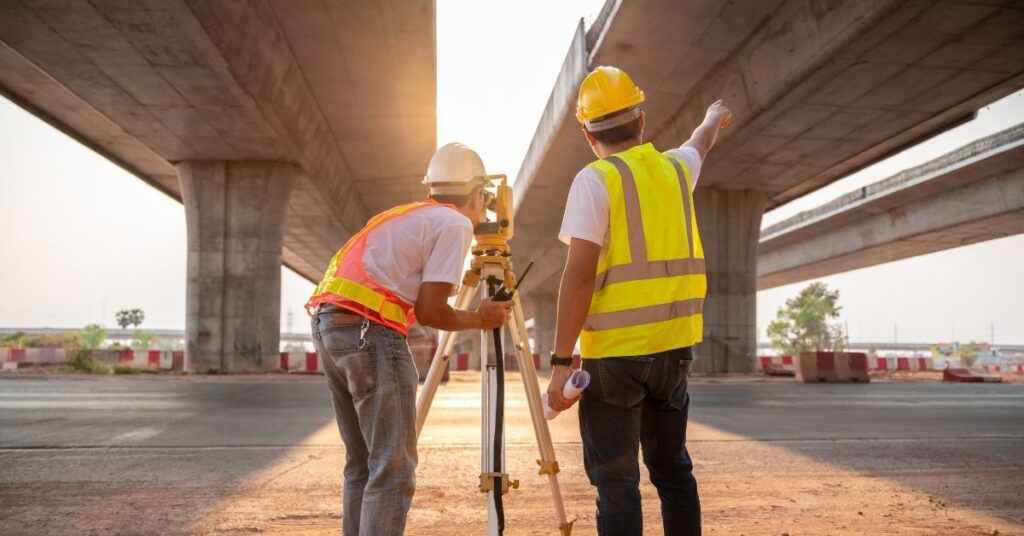
Civil construction encompasses the design, construction, maintenance, and management of public and industrial infrastructure — roads and highways, bridges, tunnels, airports, railways, water treatment plants, dams, reservoirs, power plants, sewer systems, utility pipelines, drainage, and earthworks. These businesses sit at the foundation of Australia's economic and social infrastructure, executing projects that are largely publicly funded, essential in nature, and increasingly urgent as population growth, urban densification, and the energy transition drive demand for new and upgraded infrastructure assets.
The sector's M&A activity has been vigorous at all levels of the market. At the large end, landmark transactions include Gamuda's $212 million acquisition of Downer's Australian Transport Projects business, SRG Global's $111 million acquisition of Diona, Sojitz's AUD $470 million acquisition of Capella Capital from Lendlease, and international engineering consultancies such as WSP continuing to acquire specialist Australian civil and structural engineering firms. At the mid-market level, private equity and trade buyers are actively acquiring established civil contractors, earthworks operators, and specialist infrastructure services businesses in the $1M–$20M EBITDA range.
Despite the extraordinary pipeline opportunity, the sector faces a structural constraint that is shaping both operational performance and exit decisions: a workforce shortage that Infrastructure Australia estimates at 141,000 workers today and projects will surge to over 300,000 by mid-2027. For business owners who have built their civil contracting businesses over decades, this labour environment — combined with rising equipment costs, project complexity, and the personal demands of managing a large workforce — is accelerating exit planning among operators in the 50–65 age cohort.
This report provides business owners, operators, and advisors in the Australian civil construction and civil engineering sector with a comprehensive overview of current M&A activity, valuation benchmarks, buyer profiles, and the key trends shaping transaction outcomes in 2026.
Sector Overview
Industry Scale and Structure
Australia's construction industry generated total revenue of approximately $641.1 billion in 2026 according to IBISWorld, reflecting annualised growth of 2.8% over the five years to FY2025–26. Engineering and infrastructure construction — the segment most directly aligned with civil construction activity — reached $36.5 billion of work done in the December 2024 quarter alone, representing 4.7% year-on-year growth driven by strong activity in utilities and mining infrastructure. Oxford Economics forecasts that engineering construction activity will grow 7.6% in FY25 to reach $144.5 billion (in constant FY23 prices), averaging $145.0 billion per annum over the five years to FY29.
The civil construction segment is structured across three broad tiers. Tier 1 contractors — including CIMIC Group (CPB Contractors), Downer Group, Fulton Hogan, John Holland, and Acciona — deliver the largest and most complex projects directly for government clients, with individual contract values frequently exceeding $500 million. These businesses are largely foreign-owned or ASX-listed, operate nationally, and are the primary targets for international strategic acquirers seeking Australian market entry or scale. Tier 2 contractors — typically generating $50 million to $500 million in annual revenue — operate across multiple states or significant regional markets, often focusing on a specialist segment (water infrastructure, road construction, earthworks, rail) and acting as principal contractors on mid-scale public projects or as major subcontractors on Tier 1 projects. Tier 3 and smaller operators — the largest segment by business count — are typically owner-operated businesses generating under $50 million in annual revenue, focused on local and regional markets, and specialising in earthworks, excavation, drainage, utility installations, and related civil works. This third tier is where the most significant M&A activity occurs for business brokers and M&A advisors working in the $1M–$20M transaction space.
According to IBISWorld, there are over 452,820 active construction companies in Australia as of June 2025, the vast majority of which are small to medium enterprises. The civil engineering and infrastructure sub-segment alone supports hundreds of thousands of workers across trades, engineering, project management, and operations roles — making it one of Australia's largest employing industries.
The Government Infrastructure Pipeline: A Generational Opportunity
The single most important commercial driver of M&A activity in the Australian civil construction sector is the scale and longevity of the government infrastructure investment pipeline. Infrastructure Australia's 2025 Infrastructure Market Capacity Report identifies the five-year Major Public Infrastructure Pipeline (MPIP) at $242 billion across FY2024–25 to FY2028–29 — up 14% ($29 billion) compared to the prior year's projection and the highest level since tracking began. When private sector construction investment is added, total construction activity across the country exceeds $1.14 trillion.
The Federal Government's 2025–26 Budget allocated $60.7 billion in general government infrastructure funding over the four years to FY2028–29, with Queensland receiving the largest share ($16 billion), followed by NSW ($14.2 billion) and Victoria ($13.6 billion). The pipeline is heavily weighted toward transport infrastructure ($129 billion, or 53% of the MPIP), followed by buildings infrastructure ($77 billion, 32%), energy and utilities ($36 billion, 15%), and resources ($12 billion, 5%).
Key projects driving sustained demand for civil construction capacity include the Brisbane 2032 Olympic and Paralympic Games infrastructure program, the Sydney Metro network extension works, major highway and motorway upgrades across the eastern seaboard, the national renewable energy transition (transmission lines, pumped hydro, solar and wind farm civil works), national defence infrastructure investment, and ongoing water security and wastewater treatment upgrades across all states. For civil contractors of all sizes, this pipeline represents a once-in-a-generation volume of work — but also a once-in-a-generation competition for labour, plant, and bonding capacity.
Workforce: The Sector's Critical Constraint
No discussion of Australia's civil construction sector in 2026 can avoid confronting the workforce crisis. Infrastructure Australia's 2025 Infrastructure Market Capacity Report is unambiguous: as of October 2025, the industry is short 141,000 workers needed to deliver the public infrastructure pipeline alone — and that shortage is projected to surge to more than 300,000 workers by mid-2027 as renewable energy projects, defence infrastructure, and Olympic Games preparation all ramp up simultaneously.
The breakdown by occupation illustrates the depth of the challenge. Shortages for trades workers and labourers are forecast to peak at 126,000 by mid-2027. Engineers and scientists face a shortage of similar magnitude in late 2026. Project management professionals face a shortfall of approximately 59,000. In total, the forecast gap of 197,000 workers for 2025 — across trades, engineering, and project management — represents a structural ceiling on the industry's capacity to deliver the work that is being contracted and funded.
Australia's current infrastructure workforce stands at approximately 204,000 workers. Adding 300,000 more on top of that base within two years is not a realistic near-term scenario. In the industry survey conducted by Infrastructure Australia, 63% of firms cited labour cost and 59% cited labour and skills shortages as a substantial threat to project delivery. Regional shortages are expected to quadruple between 2025 and 2027, driven largely by renewable energy projects being built outside capital cities.
Government responses have included the introduction of 20,000 Fee-Free TAFE and VET places (including 5,000 pre-apprenticeship places), the new Key Apprenticeship Program providing up to $10,000 in direct payments to apprentices in clean energy trades (effective 1 July 2025), a $78 million Advanced Entry Trades Training Program, and fast-tracking of overseas qualifications recognition under the Skills Migration Framework. These measures are meaningful but will take years to materially expand workforce supply. For the foreseeable future, labour scarcity remains the defining operational challenge of civil construction in Australia.
For business owners considering an exit, the workforce environment is both a risk and an opportunity. It is a risk in the sense that buyer due diligence will scrutinise workforce stability and the dependency of operations on the outgoing owner's personal relationships with key staff. It is an opportunity in the sense that businesses with stable, certified, and well-documented workforces — particularly those with their own apprenticeship or training pipelines — represent genuinely scarce assets that strategic buyers will pay a meaningful premium to acquire.
Recent M&A Transactions — 2022 to 2026
The following transactions illustrate the range and depth of M&A activity across the Australian civil construction and civil engineering sector in the period 2022–2026, from large-cap strategic acquisitions to mid-market specialist operator transactions.
| Business / Asset | Acquirer | Value (AUD) | Date | Strategic Rationale |
|---|---|---|---|---|
| Downer Australian Transport Projects (DT Infrastructure) — Downer EDI's Australian transport infrastructure contracting business; included over 1,100 staff, $2 billion work-in-hand pipeline, and landmark contracts including Sydney Metro West Western Tunnelling Package ($2.16B) and Coffs Harbour Bypass ($1.35B) | Gamuda Berhad (Malaysia) via DT Infrastructure Pty Ltd | $212 million | Jun 2023 | Strategic entry by one of Southeast Asia's largest listed infrastructure developers into the Australian tunnelling and major transport infrastructure market. Gave Gamuda immediate scale, a Tier 1 project pipeline, and established relationships with Australian government clients. Illustrates the premium international buyers will pay for contracted revenue and a Tier 1 workforce in a high-demand market. |
| Diona Pty Ltd — Sydney-based asset management and civil construction services business with 750 staff; specialised in water security infrastructure (pipelines, storage systems) and energy transition (electricity network upgrades); $216M revenue FY24; $1B work-in-hand | SRG Global Limited (ASX: SRG) | $111 million (~6x EV/EBIT) | Aug 2024 | Transformational acquisition adding east-coast utility infrastructure capability to SRG's existing west-coast focused business. Diona's long-term revenue visibility (5-year contract base with government agencies and utilities), recurring maintenance revenue, and strong growth in water security and energy transition markets justified the 6x multiple. Post-acquisition, SRG's total work-in-hand reached $4 billion and FY25 revenue guidance was upgraded to $125M EBITDA. |
| Capella Capital Partnership — Australian public infrastructure developer and investment platform; subsidiary of Lendlease Corporation; specialist in public-private partnership (PPP) infrastructure development including hospitals, schools, transport, and correctional facilities | Sojitz Corporation (Japan) | JPY 47 billion (~AUD $470 million) | Jan 2025 (targeted completion Jun 2025) | Sojitz's acquisition of Capella from Lendlease confirms sustained Japanese institutional appetite for Australian infrastructure assets with long-duration, government-backed revenue. PPP infrastructure development generates predictable, inflation-linked cash flows highly attractive to infrastructure investors. Reinforces the premium applied to businesses with government-backed, long-term revenue contracts. |
| Calibre Group (including Diona) — engineering and infrastructure consultancy providing project management, design, and infrastructure services across mining, energy, defence, and civil sectors in Australia; parent of Diona prior to WSP acquisition | WSP Global (Canada) | $275 million | 2023 | WSP's acquisition of Calibre Group — and the subsequent carve-out and sale of Diona to SRG Global — is a textbook strategic acquisition followed by portfolio optimisation. WSP retained the engineering consultancy and project management components of Calibre aligned with its global professional services model, while Diona's infrastructure construction and maintenance services were better matched to SRG's operating platform. WSP has been among the most acquisitive global engineering firms in Australia. |
| enstruct — specialist structural and civil engineering consultancy with 75 staff across Sydney, Melbourne, and Brisbane; known for designing and delivering complex building and infrastructure projects | WSP Global (Canada) | Undisclosed | Early 2023 | Part of WSP's ongoing strategy of acquiring specialist Australian engineering firms to deepen technical capability in structural, civil, and infrastructure engineering. Illustrates the strong demand from global engineering consultancies for specialist Australian firms with established client relationships and technical talent — particularly in structural and civil disciplines where the skills shortage is most acute. |
| Palisade Investment Partners acquisition target — mid-market engineering and infrastructure construction business; part of Palisade's ~$500M infrastructure fund deployment; transaction valued at $220M | Palisade Investment Partners (private equity) | $220 million | Early 2024 | Palisade's third infrastructure services acquisition under its dedicated fund, signalling a clear private equity thesis around Australian infrastructure services consolidation. The $500M fund has been deployed across businesses providing comprehensive engineering and infrastructure construction services. Confirms PE appetite for infrastructure services platforms of meaningful scale, particularly those with government-aligned revenue and defensible market positions. |
| Civil Infrastructure, Roadworks, Bridge Works & Earthworks Business — North Lakes QLD — fast-growing civil construction business with FY24 revenue of $29.5M and profit of $2.3M (FY25 forecast: $31.3M revenue, $3.3M profit); government panel and infrastructure contracts; listed asking price $4.95M | Trade buyer (under offer — brokered by Morgan Business Sales) | $4.95 million (asking) | 2025 | Representative of the active mid-market segment where government panel agreements, documented revenue growth, and a diversified civil works capability attract strong buyer interest. Went under offer, illustrating the demand from trade buyers for established businesses with contracted government work. Morgan Business Sales listed and managed this transaction. |
| Civil Construction & Earthworks business — Government Panel & Contracts (QLD) — market-leading civil earthmoving and construction business, founded nearly 20 years ago, on the market for the first time; government panel and contract work; listed asking price $3.4M | Trade buyer (undisclosed) | $3.4 million (asking) | 2025 | Illustrative of the volume of established civil earthmoving businesses coming to market as founding operators reach retirement age. Government panel status, established reputation, and long operating history are key value drivers at this level. First-time-to-market businesses often attract strong interest from operators seeking to enter the government contracting space without the years required to build panel approvals from scratch. |
Valuation Benchmarks & EBITDA Multiple Ranges
Valuation in the civil construction sector is driven by a distinct set of factors compared to most other industries. Revenue alone is a poor indicator of value — a $30M revenue civil contractor with lumpy project-based work and no recurring maintenance income is fundamentally different from a $30M revenue operator with long-term government maintenance contracts and a stable, certified workforce. The following benchmarks reflect observed transaction data, broker market evidence, and published comparable analysis relevant to the Australian mid-market in 2025–2026.
Civil Construction — EBITDA Multiple Summary
| Business Type | EBITDA Multiple Range | Value Drivers — Upper Range | Value Drivers — Lower Range |
|---|---|---|---|
| Small owner-operated civil contractor (<$1M EBITDA) | 2.0–3.5x EBITDA (often asset + goodwill) |
Government panel pre-qualification; low owner-dependency; established subcontractor relationships; modern plant and equipment; consistent 3-year financial history | Owner-dependent; project-by-project revenue; no panel agreements; ageing equipment; single key customer; minimal management team |
| Mid-market civil contractor with government contracts ($1M–$3M EBITDA) | 3.0–5.0x EBITDA | Multiple government panel agreements; diversified project mix; management team in place; consistent revenue growth; strong work-in-hand pipeline; clean safety record; ISO certification | Single council or government client; owner in operational role; bonding constraints; equipment-heavy balance sheet; geographic concentration |
| Specialist civil operator — water, rail, utilities, or drainage ($1.5M–$5M EBITDA) | 4.0–6.5x EBITDA | Specialist accreditation and certifications; recurring maintenance contracts alongside project work; scarce technical workforce; utility and government preferred contractor status; strong brand in specialist niche | Over-reliance on single government department; specialist skill concentration in key individuals; limited cross-selling or geographic expansion history |
| Infrastructure services / asset management (recurring revenue model, $3M–$10M EBITDA) | 5.0–8.0x EBITDA | Long-term maintenance contracts (5+ years); government or utility counterparty; recurring revenue vs. project revenue ratio >60%; management-led operations; strong work-in-hand visibility; SRG/Diona transaction precedent at ~6x | Contract renewal risk; single-agency exposure; margin pressure from cost escalation; thin subcontractor margins; bonding or insurance limitations |
| Engineering consultancy / civil design firm ($1M–$5M EBITDA) | 4.5–7.0x EBITDA | Repeat government and private sector client base; IP and proprietary design capability; multi-disciplinary team; principal-independent revenue; geographic spread; global consultancy acquisition precedent (WSP, Stantec, AECOM) | Key-person dependency (named principals); project-dependent revenue; limited sub-specialisation; single-office concentration |
Revenue Multiple Benchmarks
In addition to EBITDA multiples, civil construction businesses are frequently assessed on revenue multiples — particularly where EBITDA margins are thin or where plant and equipment values are a significant component of business value. Industry transaction data indicates that revenue multiples for construction businesses typically fall between 0.3x and 1.2x annual turnover, with the upper end applying to businesses with long-term contracted revenue, strong margins, and minimal owner-dependency. International data from First Page Sage (Q4 2024) records private civil engineering company EBITDA multiples at a median of 8.7x and an upper quartile of 11.9x — benchmarks that are more applicable to established engineering consultancy platforms than to mid-market project-based contractors, but which illustrate the significant valuation premium available to businesses that successfully transition to recurring, asset-light service models.
Valuation by Transaction Segment
| Transaction Type | Typical Value Range | Key Buyer Profile | Typical Multiple |
|---|---|---|---|
| Small civil contractor — founder retirement or exit | $500K–$3M | Trade buyers; neighbouring operators; experienced civil managers seeking ownership | Asset-based or 2.0–3.0x EBITDA |
| Mid-market civil contractor with government panel | $2M–$15M | Trade buyers; Tier 2 operators expanding; PE-backed consolidators; interstate contractors seeking market entry | 3.0–5.0x EBITDA |
| Specialist infrastructure services with recurring maintenance | $5M–$50M | ASX-listed infrastructure services groups; PE platforms; international strategic acquirers | 5.0–8.0x EBITDA |
| Civil engineering consultancy — specialist design firm | $3M–$30M | Global engineering consultancies (WSP, AECOM, Stantec, Arcadis); domestic professional services firms; PE | 4.5–7.0x EBITDA |
| Large-scale infrastructure platform — Tier 1 / Tier 2 | $50M–$500M+ | Sovereign wealth funds; international strategic buyers (Gamuda, Sojitz); listed infrastructure funds | 6.0–10.0x EBITDA (scale premium) |
Key Industry Trends Shaping M&A in 2026
1. International Capital Targeting the Australian Infrastructure Market
Australia's stable political environment, transparent legal system, strong institutional frameworks, and unprecedented infrastructure pipeline make it one of the most attractive destinations for international infrastructure investment globally. The transactions of the past three years confirm this clearly: Gamuda's $212 million acquisition of Downer's transport business in 2023, Sojitz's $470 million acquisition of Lendlease's Capella Capital PPP platform in 2025, and WSP's continuing acquisition strategy across Australian civil and engineering firms are all expressions of international capital seeking long-duration, government-backed revenue streams in a well-regulated market.
Southeast Asian infrastructure conglomerates — particularly from Malaysia, Singapore, and Japan — have been especially active, attracted by cultural alignment with Australia's project delivery environment and the strategic value of establishing a foothold in one of the Asia-Pacific region's most active infrastructure markets. The Brisbane 2032 Olympics and Paralympics infrastructure program adds an additional layer of urgency for international operators who want to be established in the Queensland market before the major procurement activity peaks.
2. Private Equity Consolidation of Infrastructure Services
Private equity has identified Australian infrastructure services — particularly businesses providing maintenance, asset management, and specialist civil works under long-term government and utility contracts — as a highly attractive investment category. The investment thesis is compelling: government-backed revenue provides predictability through economic cycles, the labour and equipment-intensive nature of the business creates barriers to entry, the $242 billion pipeline provides a long and visible growth runway, and the market is fragmented enough to support a consolidation strategy.
Palisade Investment Partners' deployment of approximately $500 million across three infrastructure services acquisitions — including a $220 million transaction completed in early 2024 — exemplifies the PE playbook in this sector. PE firms are actively seeking businesses in the $2M–$15M EBITDA range that have government contract portfolios, specialist technical capability, and management depth sufficient to absorb the transition from founder-led to professionally managed operations. Businesses approaching these parameters are finding a genuinely competitive buyer market when they come to sale.
3. Transition from Project-Based to Recurring Revenue Models
One of the most significant strategic trends reshaping civil construction M&A is the bifurcation of the sector into project-based contractors (whose revenue is lumpy, margin-compressed, and hard to value) and infrastructure services / asset management businesses (whose revenue is recurring, predictable, and margin-resilient). The SRG Global acquisition of Diona is the most prominent recent illustration of this dynamic: Diona's business was valued at approximately 6x EV/EBIT — a premium attributable directly to its long-term utility and government maintenance contracts providing ~5 years of revenue visibility.
Business owners who have built civil contracting businesses that include ongoing asset maintenance, inspection, and rehabilitation contracts alongside project work are sitting on significantly more valuable assets than pure project contractors of similar revenue scale. The ability to articulate and document this recurring revenue component — and to demonstrate its contractual basis, renewal history, and margin profile — is a critical pre-sale preparation step for any owner in this sector.
4. Energy Transition Civil Works: A High-Growth Sub-Sector
Australia's energy transition is generating an extraordinary volume of civil construction demand. The national renewable energy buildout — transmission lines, solar and wind farm civil works, pumped hydro, battery energy storage systems, and the associated grid connection infrastructure — requires large quantities of earthworks, civil structures, road construction, utility trenching, and associated civil services. Infrastructure Australia's 2025 report projects that energy and utilities infrastructure investment will more than double to $36 billion over the next five years, driven by transmission lines, solar, wind, and pumped hydro projects.
Civil contractors who have successfully positioned themselves to capture renewable energy project work — particularly those with experience in remote or regional site establishment, high-voltage infrastructure civil works, and the specific OH&S and environmental requirements of energy transition projects — are amongst the most attractive acquisition targets in the sector. Diona's specific position in the energy transition space was explicitly cited by SRG Global as a key driver of the $111 million acquisition price.
5. Defence Infrastructure: A Growing and Specialised Opportunity
Australia's increasing defence investment — driven by the AUKUS submarine program, the Defence Integrated Investment Program, and the expansion and upgrade of military bases across the Northern Territory, Queensland, and Western Australia — is generating a significant and long-duration pipeline of defence-related civil construction work. Defence infrastructure projects typically offer higher margins than standard government civil works (reflecting their complexity, security requirements, and remote locations), longer contract terms, and a less price-competitive procurement environment. Civil contractors with defence-sector experience, security clearances, and an understanding of defence procurement processes are finding strong buyer interest from both ASX-listed contractors seeking to expand their defence exposure and international operators entering the Australian defence market.
6. Productivity, Technology, and the Rise of Digital Engineering
Australia's construction sector productivity has long been a source of concern — multifactor productivity remained flat for decades before a modest 2.0% recovery in FY2023–24. The National Construction Strategy, the National Construction Industry Forum's Blueprint for the Future, and the $900 million National Economic Reform Roundtable fund all reflect government and industry recognition that productivity improvement is essential to delivering the $242 billion pipeline within budget and on time. Key technology drivers include Building Information Modelling (BIM), AI-assisted project management, robotics and automation, and modern methods of construction. In the infrastructure survey conducted by Infrastructure Australia, 64% of building and construction firms have invested in digitalisation in the past year, with engineers and designers leading digital adoption.
For M&A purposes, technology adoption is an increasingly important value driver. Buyers — particularly PE-backed platforms and ASX-listed acquirers — are assigning meaningful premiums to civil construction businesses that have invested in digital project management systems, GPS-guided earthmoving and grading equipment, drone-based site monitoring, and BIM-compliant design delivery. These capabilities reduce rework, improve margin predictability, and make the business more readily integrable into a sophisticated acquirer's operating platform.
Buyer Profiles
ASX-Listed Infrastructure Services Groups
SRG Global (ASX: SRG), Downer Group, Ventia, and other ASX-listed infrastructure services groups represent the most natural strategic buyers for mid-to-large-scale civil construction and infrastructure services businesses. These buyers are seeking businesses that add geographic coverage, specialist capability, or government contract relationships complementary to their existing portfolio. They are particularly attracted to recurring revenue businesses — asset maintenance, inspection, rehabilitation, and long-term services contracts — that improve the predictability and quality of their reported earnings. SRG Global's post-Diona FY25 guidance upgrade, including a $125M EBITDA target and $4 billion work-in-hand, illustrates the transformational value these acquisitions can deliver for ASX-listed buyers.
International Strategic Acquirers
The international buyer universe for Australian civil construction businesses is broad and active. Global engineering consultancies — WSP, AECOM, Stantec, Arcadis, Aurecon — are consistently acquisitive of specialist Australian civil and structural engineering firms, seeking to add technical depth, geographic coverage, and Australian government relationships to their global platforms. Large Asian infrastructure conglomerates — Gamuda, Sojitz, Takenaka, and others — are targeting civil construction businesses with established project pipelines and government relationships in Australia's fastest-growing infrastructure markets. For sellers with the scale and profile to attract international attention, this buyer universe creates genuine competitive tension and supports premium transaction values.
Private Equity
PE firms are actively pursuing infrastructure services platforms in the Australian market. The PE investment thesis focuses on businesses with government-backed revenue, specialist capability, and a fragmented competitive landscape that supports a buy-and-build consolidation strategy. PE buyers typically target businesses in the $2M–$15M EBITDA range as initial platform acquisitions, with subsequent bolt-on acquisitions to build scale and geographic diversity. Palisade Investment Partners is the most visible domestic PE player in this space, but international PE firms with Australian infrastructure mandates — including IFM Investors, Macquarie Asset Management, and global PE firms with infrastructure arms — are also actively evaluating opportunities.
Trade Buyers and Regional Operators
The most active buyer segment for smaller civil contractors remains trade buyers — neighbouring operators, experienced civil construction managers seeking to own their own business, or Tier 2 contractors expanding into new geographic markets or specialist capabilities. Trade buyers apply a combination of asset-based and earnings-based valuation, are typically seeking to deploy the acquired business into a known market context, and will often pay a premium for government panel pre-qualification that has taken the vendor years to build. Vendor finance is common in this segment to bridge the gap between vendor price expectations and the quantum of bank financing available to trade buyers.
What Drives Premium Valuations in This Sector
Civil construction businesses span an extraordinarily wide valuation range — from asset-only transactions for small owner-operated contractors to 8x+ EBITDA for specialist infrastructure services platforms. The factors that drive a business to the upper end of that range are specific and well-understood. Sellers who invest time in building these attributes ahead of a sale process are consistently rewarded with better outcomes.
- Government panel pre-qualification and contract history — transferable accreditation on local council, state government, and federal government panels is a premium asset; document renewal dates, performance ratings, and contract values carefully
- Work-in-hand pipeline — a documented forward order book of contracted and committed revenue is the single most effective tool for supporting an asking price; buyers will pay for visibility and certainty of future cash flows
- Recurring maintenance revenue — the proportion of revenue derived from ongoing asset maintenance, inspection, or rehabilitation contracts (rather than one-off project work) is the most powerful EBITDA multiple driver in this sector
- Management team independence — a qualified project manager or operations manager who can run the business without the owner's daily involvement eliminates key-person risk and is essential for achieving a premium multiple
- Clean safety record and ISO certification — buyers and their insurers will scrutinise LTIFR, TRIFR, and WorkSafe history; ISO 9001, 14001, and 45001 certification signals operational maturity and reduces buyer risk perception
- Modern plant and equipment with documented maintenance records — well-maintained, owned (not heavily leased) plant and equipment reduces post-acquisition capex requirements and supports financing; GPS-guided machines are a positive differentiator
- Specialist accreditations and certifications — DBYD accreditation, water authority approved contractor status, railway corridor access certification, and specialist equipment operator licences are all defensible competitive advantages that buyers will value
- Geographic diversification — businesses operating across multiple local government areas or across multiple states are less exposed to the risk of a single government client changing procurement approach
- Bonding and insurance capacity — the ability to bond and insure large contracts is a genuine constraint for smaller operators; businesses that have built their bonding capacity and track record are able to tender for and win larger contracts, which directly supports revenue growth and valuation
Due Diligence Focus Areas for Civil Construction Transactions
Buyers in the civil construction sector conduct detailed due diligence across financial, operational, commercial, and legal dimensions. Sellers who prepare these materials proactively — in a well-organised vendor due diligence package — are far better positioned to maintain deal momentum and defend their asking price through the transaction process. Key areas include:
- Contract analysis — review of all government panel agreements, project contracts, and maintenance contracts; assessment of remaining terms, renewal provisions, change-of-ownership clauses, and concentration risk
- Work-in-hand and tender pipeline — documentation of contracted revenue, committed pipeline, and tender pipeline with probability weightings; buyers will model forward revenue on this basis
- Financial normalisation — EBITDA adjustments for owner salary, related-party transactions, and non-recurring items; margin analysis by project type; working capital requirements and debtors aging
- Plant and equipment schedule — current condition, maintenance records, financed vs. owned assets, replacement cycle assumptions, and residual values
- Workforce analysis — employee qualifications, licences, certifications, and tenure; employment contract terms; key-person identification; subcontractor relationships and reliance
- Safety and compliance records — LTIFR/TRIFR history; notifiable incidents; WorkSafe and regulator correspondence; environmental compliance history; public liability claims history
- Bonding and insurance — current bonding capacity; insurer relationships; any prior claims or exclusions; project-specific insurance requirements
- Regulatory and licensing — contractor licences, Class A/B contractor accreditations, environmental authorisations, and any outstanding compliance issues
Sources & References
- Infrastructure Australia — 2025 Infrastructure Market Capacity Report (November 2025)
- Infrastructure Partnerships Australia — Australian Infrastructure Budget Monitor 2025–26
- Infrastructure Australia — Annual Budget Statement 2026 (March 2026)
- Australian Bureau of Statistics — Engineering Construction Activity, Australia, December 2025
- Oxford Economics — Engineering Construction in Australia Q2 2025 Update (May 2025)
- IBISWorld — Construction Industry in Australia (2026)
- ConsultANZ — Australia's Infrastructure Pipeline Reaches $242 Billion (November 2025)
- Business News Australia — SRG Global Acquires Diona for $111M (August 2024)
- SRG Global Limited — Diona Acquisition Research Report (August 2024)
- MinterEllison — Gamuda's Acquisition of Downer Transport Projects Completes (June 2023)
- Gamuda Berhad — Gamuda Completes Downer EDI Acquisition (June 2023)
- Sojitz Corporation — Acquisition of Capella Capital (January 2025)
- PwC Australia — Industrials & Services Deals Digest December 2024
- Mastt — Top Construction Companies in Australia 2025
- Diggerman Training — Australia's Construction Worker Shortage 2025 (March 2026)
- First Page Sage — EBITDA & Valuation Multiples for Construction Companies 2025
- World Construction Network — M&A Activity in Australian Construction Q3 2024 (November 2024)
Frequently Asked Questions
What is the size of the Australian civil construction and civil engineering industry?
Engineering construction work done in Australia reached $36.5 billion in the December 2024 quarter alone, with Oxford Economics forecasting full-year FY2025 engineering construction activity of $144.5 billion. The five-year Major Public Infrastructure Pipeline stands at $242 billion — up 14% year-on-year and the highest level ever recorded by Infrastructure Australia. Australia's overall construction industry revenue reached $641.1 billion in 2026, contributing approximately 9% of national GDP.
What EBITDA multiples do civil construction businesses sell for in Australia?
Civil construction businesses typically transact at 2.0x–3.5x EBITDA for small owner-operated contractors, rising to 3.0x–5.0x for mid-market operators with government panel agreements and a capable management team. Specialist infrastructure services businesses with long-term recurring maintenance contracts can achieve 5.0x–8.0x EBITDA, as demonstrated by SRG Global's acquisition of Diona at approximately 6x EV/EBIT. Civil engineering consultancies with established government client relationships typically achieve 4.5x–7.0x EBITDA.
Who is buying civil construction and infrastructure businesses in Australia?
Active buyers include ASX-listed infrastructure services groups (SRG Global, Downer, Ventia), international strategic acquirers (Gamuda, Sojitz, WSP), private equity firms targeting infrastructure services consolidation, and trade buyers at the smaller end. The sector is attracting particularly strong interest from Southeast Asian and Japanese infrastructure conglomerates who see Australia's $242 billion pipeline as a compelling long-duration revenue opportunity. At the mid-market level, PE-backed consolidators and regional trade buyers are the most active cohort.
What makes a civil construction business more valuable at sale?
The most important value drivers are: a diversified pipeline of contracted government work, recurring maintenance or asset management revenue (vs. pure project-based income), a capable management team operating independently of the owner, government panel pre-qualification that is transferable to a new owner, a clean safety and compliance record, modern plant and equipment with documented maintenance history, and specialist accreditations or certifications in high-demand sub-sectors such as water infrastructure, rail, defence, or energy transition civil works.
How does the labour shortage affect civil construction valuations?
Australia's infrastructure workforce shortage — currently 141,000 workers and projected to reach 300,000 by mid-2027 — is one of the most scrutinised risk factors in civil construction transactions. Buyers will assess whether the workforce can be retained post-acquisition, whether key individuals are dependent on the outgoing owner's personal relationships, and whether the business has a pipeline of qualified staff through apprenticeship or training programs. Businesses with stable, certified, and owner-independent workforces attract meaningfully higher multiples than those where key people are likely to follow the vendor out the door.
How can Morgan Business Sales help me sell my civil construction or civil engineering business?
Morgan Business Sales specialises in the confidential sale of Australian businesses, including civil construction contractors, earthworks operators, civil engineering firms, infrastructure services providers, and specialist sub-sector businesses across roads, water, rail, defence, and energy transition. Our team provides pre-sale business valuations, buyer identification, deal structuring, and full transaction management. To start a confidential conversation, visit morganbusinesssales.com/book-a-consultation/ or call 1300 577 297.
Thinking About Selling Your Civil Construction Business?
Whether you operate a civil contracting business, earthworks and excavation company, infrastructure services firm, or civil engineering consultancy, Morgan Business Sales can help you understand your current market value and plan a strategic, confidential exit. Our advisors have experience across the civil construction sector and access to a national buyer network — including trade buyers, listed infrastructure groups, and private equity firms actively seeking acquisitions.
Book a Free Consultation📞 1300 577 297 | 📩 support@morganbusinesssales.com | 💻 morganbusinesssales.com
Disclaimer: This report has been prepared by Morgan Business Sales for general informational purposes only. It does not constitute financial, legal, or investment advice. Transaction values, EBITDA multiples, and market data are based on publicly available information, industry sources, and Morgan Business Sales' market experience, and may vary materially depending on individual business circumstances. Readers should seek independent professional advice before making any business or investment decisions. Morgan Business Sales is a licensed business broker. All transactions are subject to individual due diligence and commercial negotiation.